Farms.com Home   Ag Industry News

Grain terminal to be built near Maymont, Saskatchewan

Facility could open by 2018

By Diego Flammini
Assistant Editor, North American Content
Farms.com

A new grain terminal is being built near Maymont, Saskatchewan and it could be open within two years.

The project is being led by GrainsConnect Canada, a 50/50 partnership with GrainCorp of Australia and Zen-Noh Grain Corporation, an American subsidiary of Japan’s Zen-Noh. It  is one of four terminals being constructed. Another will be built in Saskatchewan and the other two in Alberta.

“These sites will be part of a fully integrated supply chain for the origination, marketing, storage, handling, distribution and exporting of Canadian grain and oilseed,” GrainCorp said in a December 2015 release.

During a recent investor presentation, GrainCorp said the Canadian facilities represent a substantial investment in Canadian grain infrastructure.
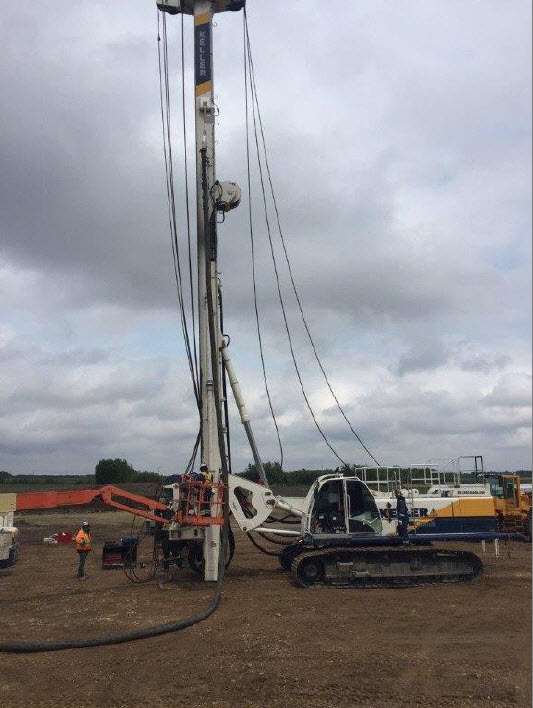
Grain Corp
Initial drilling for grain elevator construction at Maymont, Saskatchewan.
Photo: GrainCorp


The projects will also provide exposure to the Canadian grain market, which has an average annual production of 63MMT, compared to Australia’s 36MMT. Combined, the four facilities will have a total throughput of about 1 MT.

According to the presentation, GrainCorp has the land and the crews in place to begin building.

“Land has been purchased and civil and construction contractors have been commissioned to start building grain elevators and shuttle loaders,” the presentation says.


Trending Video

Dicamba Returns for Georgia Farmers: What the New EPA Ruling Means for Cotton Growers

Video: Dicamba Returns for Georgia Farmers: What the New EPA Ruling Means for Cotton Growers

After being unavailable in 2024 due to registration issues, dicamba products are returning for Georgia farmers this growing season — but under strict new conditions.

In this report from Tifton, Extension Weed Specialist Stanley Culpepper explains the updated EPA ruling, including new application limits, mandatory training requirements, and the need for a restricted use pesticide license. Among the key changes: a cap of two ½-pound applications per year and the required use of an approved volatility reduction agent with every application.

For Georgia cotton producers, the ruling is significant. According to Taylor Sills with the Georgia Cotton Commission, the vast majority of cotton planted in the state carries the dicamba-tolerant trait — meaning farmers had been paying for technology they couldn’t use.

While environmental groups have expressed concerns over spray drift, Georgia growers have reduced off-target pesticide movement by more than 91% over the past decade. Still, this two-year registration period will come with increased scrutiny, making stewardship and compliance more important than ever.