The pluses and minuses of this tractor from the early 1970s
IN THE SHOP with Rachel
By Rachel Gingell
Farms.com
The Minneapolis-Moline G1355 is a powerful tractor sold at a low price - but it’s a deal that’s a little too good to be true.
While the full model name is “G1355,” many people drop the G when talking about the tractor. The Minneapolis-Moline G1355 is the same tractor as the White 2270 and the Cockshutt 2270. (Just with a different paint job). Oliver also produced this tractor - sometimes sold as the Oliver G1355, sometimes sold as the Oliver 2270. I’ll refer to the tractor as the 1355 throughout this article, but it’s exactly the same tractor sold under these different brands.
The 1355 was manufactured from 1972 to 1974. The original selling price was $11,600. I’ve only seen diesel models, but literature suggests that LP-gas was also an option.
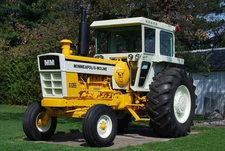
The 1355 is a strong tractor with more than 100 horsepower. It sells today for a very low price -around $5,000 US in good condition.
The rear end and transmission of this tractor are excellent. I’m a real fan of the Hydraul-Shift transmission used in this tractor, which shifts smoothly between 18 forward gears and 6 reverse.
The 6-cylinder diesel engine is reasonably fuel-efficient, but it has a big problem: the camshaft.
Consistent camshaft problems have plagued this model. Moline tried to correct this problem over the years, but the problem is deeper than a simple repair. I have a relative who replaced the camshaft on his 1355 multiple times only to have it repeatedly fail. This is a common scenario for the 1355 - so common that I believe this tractor spelled the beginning of the end for the Minneapolis-Moline brand.
If you never use this tractor to its full capacity, you might get away without having any camshaft problems… but what’s the use of a 100+ horsepower tractor if you can’t use all the power?