Most new vehicles in the province must be zero-emission by 2040
By Diego Flammini
Staff Writer
Farms.com
A planned piece of legislation in British Columbia could have a significant effect on farmers in the province.
On Nov. 20, Premier John Horgan announced that he will introduce a bill in the spring to “put British Columbia on a path to require the sale of all new light-duty cars and trucks to be zero-emission vehicles (ZEVs) by the year 2040.”
The regulations will come into effect in stages, with an aim of about 10 per cent ZEVs by 2025, 30 per cent by 2030 and finally 100 per cent by 2040.
Producers use pickup trucks for several farm duties, and some individuals are concerned how rural residents will access the necessary infrastructure for ZEVs.
“We’re hoping that the government has got some great background on how they’re actually going to help us get there because at this point I think it’s a bit of a dream,” Stan Vander Waal, president of the B.C. Agriculture Council, told News 1130 yesterday. “There’s an awful lot of areas in rural B.C. that there is no chance of this going to happen by 2040.”
At this point, any vehicles over 8,500 lbs. (3,855 kg) may be exempt from the emission requirements.
A John Deere 9560RT tractor, for example, weighs between 44,910 lbs. (20,370 kg) and 47,015 lbs. (21,325 kg). But a John Deere 3005 tractor can weigh as little as 1,920 lbs. (870 kg), TractorData.com says.
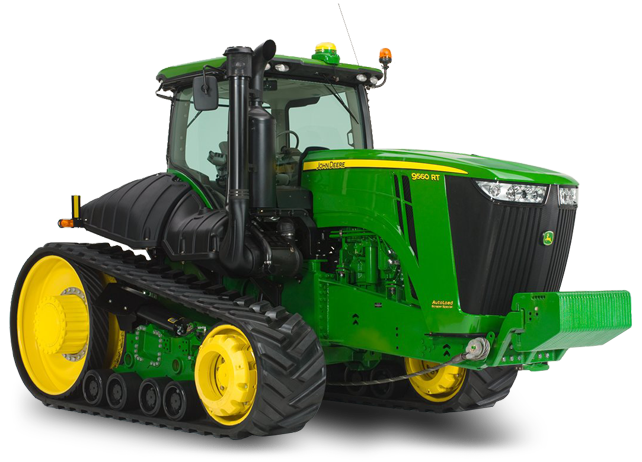
John Deere 9560RT
Until the provincial government provides concrete details about its plan and how it relates to the ag industry, producers are speculating if a zero-emission tractor would be a viable piece of equipment.
“I don’t know if there’s a battery-powered tractor in the works that can generate the kind of horsepower we need and operate the way we need it to,” Sukhpaul Bal, a cherry producer from Kelowna, B.C., told Farms.com.
Farms.com has reached out to the Premier’s office and the Ministry of Agriculture for comment on the bill and its effect on agriculture.
Nerthuz/iStock/Getty Images Plus