Herbicide combines dicamba and CSI Safener
By Diego Flammini, Farms.com
The livelihoods for many farmers are their crops. Without successful crops, farmers don’t prosper, meaning there’s less food to eat and costs could potentially rise.
With all the work farmers put into their fields, they also spend time protecting it from weeds using herbicides.
The United States Environmental Protection Agency gave its approval and registration for the corn herbicide DiFlexx, a product of Germany’s Bayer CropScience, who has operations in Canada and the United States.
The product combines dicamba which may go by brand names including Banvel or Diablo, and Bayer’s CSI (Crop Safety Innovation) safener, which can enhance corn’s natural ability to stand up to herbicide use. Trials from 2013 revealed dicamba kept 97% of broadleaf weeds like Motherwort, Cornflower, Corn spurry and Hawkweed at bay.
“My giant rag (weed) patch isn’t a 100-foot circle, it's a giant rag patch that starts off with 20-25 weeds per square foot,” George Roberts from Trivoli, Illinois said. “DiFlexx solved the problem. Not one giant ragweed got through, and I got down to two passes instead of four or five. Having a clean field is a big deal.”
DiFlexx may also control weeds resistant to glyphosate such as Smooth Pigweed, Palmer Amaranth and Goosegrass.
Join in on the conversations. Is DiFlexx something you will use on your farm? Have you used it already and was it successful?
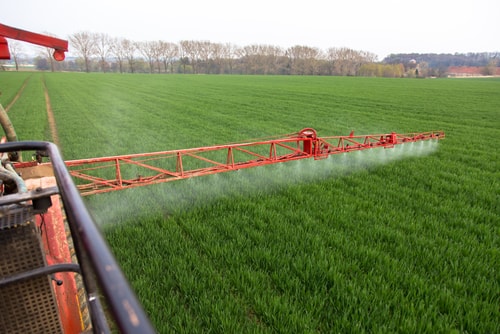
Herbicides being applied