Farms.com Home   Ag Industry News

Canola farmers concerned about China’s new import regulations

China is Canada’s largest canola customer

By Diego Flammini
Assistant Editor, North American Content
Farms.com

Some Canadian canola farmers are worried that China’s new regulations on canola imports will result in serious trouble for the industry.

China recently said it’s changing the amount of dockage allowed in shipments from 2.5 per cent to less than one per cent.

Those within the canola industry think the additional costs of cleaning the crops to meet China’s regulations could result in higher prices.

“Those higher physical costs of cleaning down to that level … will be passed back through the industry and farmers will certainly be picking up their share,” Rick White, CEO of the Canadian Canola Growers Association, told Global News.
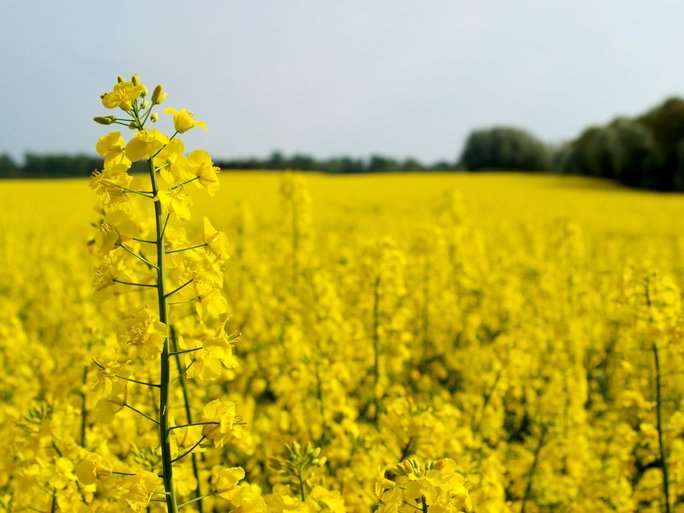
Canola field

But producers worry the added work could have a trickledown effect and impact different industries.

"It'll be a ripple effect that's going to happen. Once we have to start cleaning this stuff down to one per cent, it just plugs the whole system up and it's going to cause backlogs in canola shipments, wheat shipments, barley shipments — any sort of grains that we export," Kevin Serfas, a canola farmer near Lethbridge, Alberta, told CBC.

China said it’s implementing new regulations to keep blackleg out of the country. But Lynn Jacobson, president of the Alberta Federation of Agriculture said Canada has blackleg under control and told CBC China’s claim is a “false argument.”


Trending Video

What Does 20 MILLION Hogs a Year Look Like?

Video: What Does 20 MILLION Hogs a Year Look Like?


?? The Multi-Plant System Processing 20 Million Hogs Annually in the Midwest JBS USA operates multiple large-scale pork processing facilities across the Midwest, including major plants in Iowa, Minnesota, and Indiana. Combined, these facilities have the capacity to process approximately 20 million hogs annually.

Each plant operates high-speed automated slaughter systems capable of processing up to 20,000 head per day, followed by fabrication lines that break carcasses into primals, sub-primals, and case-ready retail products.

Hog procurement is coordinated through electronic marketing platforms that connect regional contract finishing operations and independent producers to plant demand schedules. This digital procurement system allows for steady supply flow and scheduling efficiency across multiple facilities.

Processing plants incorporate comprehensive food safety systems, including pathogen intervention technologies, rapid chilling processes, and integrated cold-chain management. USDA inspection is embedded throughout the harvest and fabrication stages to ensure regulatory compliance and product integrity. Finished pork products — from bulk primals to retail-ready packaged cuts — are distributed through coordinated logistics networks serving domestic and export markets.