Jack Pine Acres is located near Pickle Lake
By Diego Flammini
Assistant Editor, North American Content
Farms.com
A couple is running what they believe is the northernmost farm in Ontario.
Jeremy and Liana Millar, with their business partner Hans Orav, operate Jack Pine Acres, a 200-acre property located in about 15 minutes away from Pickle Lake, Ontario – or about 530km away from Thunder Bay.
Pickle Lake is considered the province’s most northern community with year-round road access.
Jack Pine Acres raises pigs, sheep, goats, chickens, turkeys and cows. The operators use generators for electricity, fences made of wood pallets and repurposed trailers as barns.
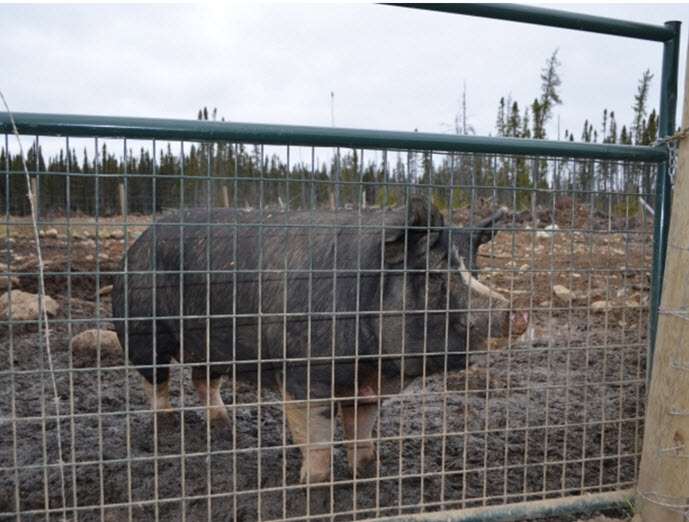
A pig at Jack Pine Acres farm.
Photo: Ron Desmoulins/CBC
Temperatures can fall below 30 degrees Celsius in the winter, but that hasn’t stopped the animals from being healthy.
“(My feed supplier was) actually surprised at how big and fast the turkeys grew up here,” Jeremy told CBC.
“Our Holstein cows wintered last year very well,” he said. They wouldn’t even go in the barn. They wouldn’t leave the hay bale.”
“We’ve had no problems with disease, or lice, or mites or any of those infestations that you find in warmer climate farms,” Liana told CBC. “They can’t survive here.”
However, being in such a remote location, farmers need to start from scratch.
“You need to start from ground zero. You need to clear the land, pick the rocks and grow the fields,” Liana said. “You need to really want to do it.”
Currently, the Millars call their operation a hobby farm, but hope to go beyond that in the future by offering fresh, local meat to local communities.
“We’ve had a lot of support and people agree that it would be a good idea,” Liana told CBC. “We’ve got the land, there’s no reason not to use it.”