One NWT farmer is working to improve food security in Canada’s North
By Kaitlynn Anderson
Staff Reporter
Farms.com
In the northern territories, due to climate and location, many Canadians lack access to sufficient nutritious food.
In fact, the most recent data reveals that 46.8 per cent of families in Nunavut and 24.1 per cent of families in the NWT are food insecure, according to a report by PROOF.
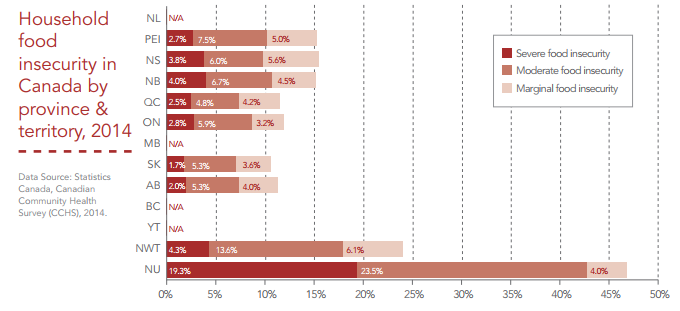
Source: Household Food Insecurity in Canada, 2014, PROOF Food Insecurity Policy Research
However, an egg farm in Hay River, NWT, is providing northern Canadians with a local product in hopes of improving household food security, according to an article in the Huffington Post on Friday.
The farm, known as Polar Egg, hopes to promote economic growth as well.
"We're hoping that what we're creating at Polar Egg can build a foundation for some of these newer markets,” Kevin Wallington, director of marketing and sales at Polar Egg, said in the article.
To work with the cooler climate of the north, the business has climatized barns for the laying hens.
This innovation and hard work at Polar Egg doesn’t go unnoticed, either.
"Across the country, our farmers are making a difference in their communities by creating jobs, contributing to their local economy and providing the population with one of the most nutritious foods available,” Tim Lambert, CEO of the Egg Farmers of Canada, said in the article.
The Egg Farmers of Canada has a vision of “a world where everyone – whether it be due to want or need – can enjoy the immeasurable benefits of the humble egg”, according to their website.
Thanks to Polar Egg, this vision can become a reality in Canada’s territories.