Farms.com Home   Ag Industry News

Fines for illegally spraying pesticides in Missouri could be on the rise

State Rep. Don Rone plans to introduce a bill in January

By Diego Flammini
Assistant Editor, North American Content
Farms.com

The Missouri Department of Agriculture (MDA) is investigating about 115 complaints related to pesticides and at least one State Representative feels changes are needed.

State Rep. Done Rone plans to pre-file legislation in December which would increase the penalties for those who misuse or illegally spray pesticides under the Missouri Pesticide Use Act.

Judy Grundler, division director for plant industries MDA told St. Louis Public Radio that there’s usually about 80 complaints annually.

Grundler said seventy investigations are ongoing and encompass an area spanning 40,000 acres and 400 fields. Soybeans, peaches and watermelons are among the damaged crops reported.
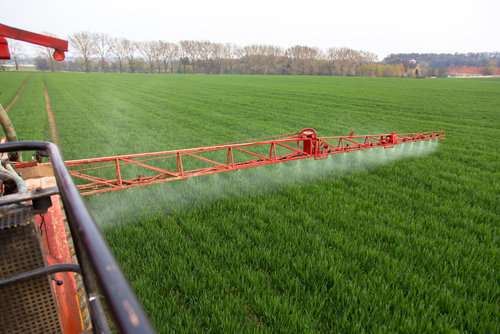
Spraying

The current penalty is $1,000 per field. Under Rone’s bill, that penalty could increase to $10,000 per field.

Mssourinet reports that Rone is going to ask House Speaker Todd Richardson to fast-track the bill in January in the hopes it gets passed before next year’s planting season begins.

“Because if we don’t fast-track this, then the growing season down there (southeast Missouri) starts in March and we need to have this already in place, the Governor signed it and make it law before the next planting season which starts in the end of March,” Rone told Missourinet.


Trending Video

Evolution of Beef Cattle Farming

Video: Evolution of Beef Cattle Farming

The Clear Conversations podcast took to the road for a special episode recorded in Nashville during CattleCon, bringing listeners straight into the heart of the cattle industry. Host Tracy Sellers welcomed rancher Steve Wooten of Beatty Canyon Ranch in Colorado for a wide-ranging discussion that blended family history and sustainability, particularly as it relates to the future of beef production.

Sustainability emerged as a central theme of the conversation, a word that Wooten acknowledges can mean very different things depending on who you ask. For him, sustainability starts with the soil. Healthy soil produces healthy grass, which supports efficient cattle capable of producing year after year with minimal external inputs. It’s an approach that equally considers vegetation, animal efficiency, and long-term profitability.

That philosophy aligned naturally with Wooten’s involvement in the U.S. Roundtable for Sustainable Beef, where he served as a representative for the Colorado Cattlemen’s Association. The roundtable brings together the entire beef supply chain—from producers to retailers—along with universities, NGOs, and allied industries. Its goal is not regulation, Wooten emphasized, but collaboration, shared learning, and continuous improvement.