Farms.com Home   Ag Industry News

Iowa State University vet identifies virus with in pigs with symptoms similar to polio

Discovery was made by Paulo Arruda and other scientists

By Diego Flammini
Assistant Editor, North American Content
Farms.com

A team of scientists, led by a veterinary researcher at Iowa State University, has discovered a virus in the central nervous systems of young pigs with symptoms similar to polio.

Paulo Arruda led other researchers from the University of Minnesota and Kansas State University in studying 11-week old pigs that, as a result of an unknown weakness, were unable to walk.
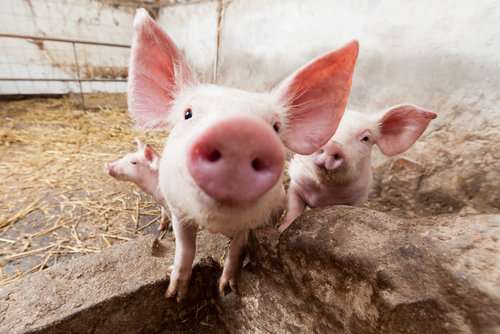
The team discovered microscopic lesions on the pigs’ central nervous systems. The lesions contained a sapelovirus. This virus is common in pigs, but the strain found in this particular research was different than the strain typically found.

“We’re collecting evidence, sort of like in a forensic investigation,” Arruda said in a release. “But we still have a lot of questions that need to be answered about this virus.”

Arruda said the researchers aren’t sure the virus is responsible for the lesions and a lack of scientific evidence makes it difficult to understand how widely it can spread.

Arruda also said hog farms dealing with the disease could lose up to two per cent of their livestock, but there’s no evidence the virus makes pork unsafe for human consumption.


Trending Video

Evolution of Beef Cattle Farming

Video: Evolution of Beef Cattle Farming

The Clear Conversations podcast took to the road for a special episode recorded in Nashville during CattleCon, bringing listeners straight into the heart of the cattle industry. Host Tracy Sellers welcomed rancher Steve Wooten of Beatty Canyon Ranch in Colorado for a wide-ranging discussion that blended family history and sustainability, particularly as it relates to the future of beef production.

Sustainability emerged as a central theme of the conversation, a word that Wooten acknowledges can mean very different things depending on who you ask. For him, sustainability starts with the soil. Healthy soil produces healthy grass, which supports efficient cattle capable of producing year after year with minimal external inputs. It’s an approach that equally considers vegetation, animal efficiency, and long-term profitability.

That philosophy aligned naturally with Wooten’s involvement in the U.S. Roundtable for Sustainable Beef, where he served as a representative for the Colorado Cattlemen’s Association. The roundtable brings together the entire beef supply chain—from producers to retailers—along with universities, NGOs, and allied industries. Its goal is not regulation, Wooten emphasized, but collaboration, shared learning, and continuous improvement.