Farms.com Home   Ag Industry News

Kentucky Ag Commissioner praises producers

Ryan Quarles said many ag initiatives are underway

By Diego Flammini
Assistant Editor, North American Content
Farms.com

At a meeting with members of the Bowling Green Noon Rotary Club, Kentucky Agriculture Commissioner Ryan Quarles said the state should be proud of its agricultural contributions.

“We are one of the nation’s leaders when it comes to farming and what you can do with it,” he said, according to the Bowling Green Daily News. “Farming is a story about small towns. It’s a story about family farms. It’s a story that almost every American can relate to if you go back far enough in your family tree.”

Quarles said the United States is producing more food with less land and credits Kentucky farmers, research and innovative agricultural practices for it.
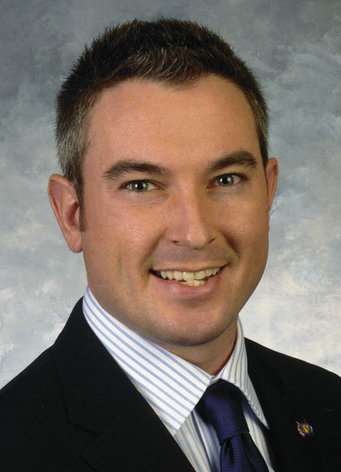
Ryan Quarles

During the meeting, Quarles also touched on developing alternative crops, notably industrial hemp.

“Industrial hemp has a future in our state. It’s a crop that connects our past to our future.” He added that over 4,000 acres of hemp have been planted and the department will also study hops, canola and chia.

He discussed the issue of people in Kentucky going to bed without a meal, and the anti-hunger initiative that’s being worked on.

“Some early solutions are helping farmers harvest unmarketable produce,” he said. “Some edible food goes to waste because of a few blemishes. That produce could be harvested and taken to food banks.”


Trending Video

Evolution of Beef Cattle Farming

Video: Evolution of Beef Cattle Farming

The Clear Conversations podcast took to the road for a special episode recorded in Nashville during CattleCon, bringing listeners straight into the heart of the cattle industry. Host Tracy Sellers welcomed rancher Steve Wooten of Beatty Canyon Ranch in Colorado for a wide-ranging discussion that blended family history and sustainability, particularly as it relates to the future of beef production.

Sustainability emerged as a central theme of the conversation, a word that Wooten acknowledges can mean very different things depending on who you ask. For him, sustainability starts with the soil. Healthy soil produces healthy grass, which supports efficient cattle capable of producing year after year with minimal external inputs. It’s an approach that equally considers vegetation, animal efficiency, and long-term profitability.

That philosophy aligned naturally with Wooten’s involvement in the U.S. Roundtable for Sustainable Beef, where he served as a representative for the Colorado Cattlemen’s Association. The roundtable brings together the entire beef supply chain—from producers to retailers—along with universities, NGOs, and allied industries. Its goal is not regulation, Wooten emphasized, but collaboration, shared learning, and continuous improvement.