Blue Roof Distillers is located on a family farm in Malden, N.B.
By Diego Flammini
News Reporter
Farms.com
A sixth-generation farmer from Malden, N.B. has found a market for potatoes too small to sell to grocery stores.
Blue Roof Distillers is the first Canadian farm-to-bottle distillery making vodka from potatoes.
The family used to donate the tiny taters from its 350-acre farm to local cattle farmers for feed or sell them to a dehydration plant that would turn them into potato flakes.
But an oversupply of small potatoes meant the dehydration plant’s prices were low, so the family needed a new business venture, says Devon Strang.
“There wasn’t really any money in the small potatoes,” he told Farms.com. “They just became a waste on the farm and I didn’t like having that waste around. We thought we could do something different and decided to give it a try.”
Strang estimates Blue Roof has sold about 7,500 bottles since opening in June.
At $44.99 per bottle, that adds up to roughly $337,425 in sales.
The value-added vodka business on the farm is a sign of where agriculture might be going.
When farmers pay to plant, fertilize, harvest and transport crops, there’s no such thing as a commodity having zero value, says Strang.
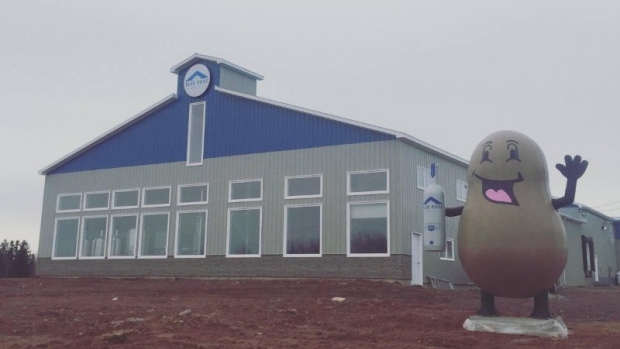
Blue Roof Distillery
Photo: Devon Strang/CBC
“Retailers are always crunching for more profits, so farmers have to make every dollar and cent count where it can,” he said. “We pay to grow (the potatoes) and they take up space in our trucks and storage areas. It’s only when they get to the end of production that they have no value. By that point, you’ve already spent money producing the crop.”
“Why put all this money into the crop if you can’t at the very least get your money back?”
Blue Roof is also working to educate the public about how many industries agriculture impacts.
Visitors can tour the farm and distillery to learn about crop production and the alcohol creation process.
Aside from the 25-foot potato statue in front of the farm, tourists are surprised at agriculture’s role in vodka production.
“People are quite amazed and what we’re doing and how we do it,” Strang said. “A lot of people tell me they didn’t know vodka could be made from potatoes.”
“We tell them it’s typically made from other grains because they’re cheaper and higher yielding than potatoes. And we hope that when they leave the farm they’ve learned something.”