Tar spot also found in Indiana
By Diego Flammini, Farms.com
Tar spot, a disease that targets corn, has been confirmed in LaSalla, DeKalb and Bureau counties in Illinois.
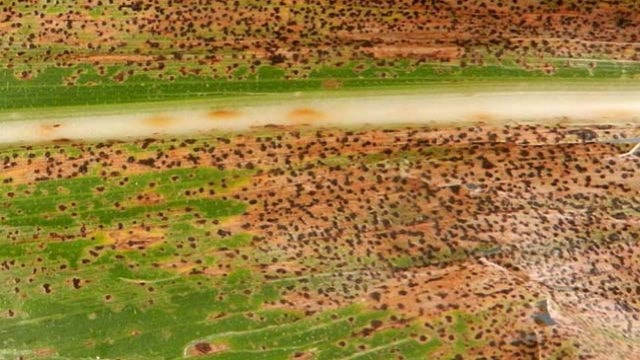
Officials in Illinois don’t expect the disease to have major impacts on this year’s crop.
"We anticipate minimal impact on yields with detection this late in the growing season," said agriculture director Philip Nelson in a release. "However, it is important for farmers to report any suspected findings to prevent the spread of this disease and provide an accurate picture on statewide impact."
The confirmation of tar spot in Illinois comes after the disease was discovered in Indiana by the Purdue University Plant Diagnostic Clinic. The detection of the disease is the first of its kind in the United States. The disease is usually found in Mexico, Central and South America.
Farmers are encouraged to look for brown-colored lesions on leaves that are followed by black structures that produce spores; the leaves will appear rough or bumpy to the touch.
Kiersten Wise and Gail Ruhl, authors of an article in Purdue’s Pest and Crop newsletter, said work is still being done to determine if there will be any impact on Indiana’s corn crop, but it doesn’t appear likely.
They also said investigations will continue to assess how the disease made its way to Indiana and how to prevent it from spreading further.
Farmers in Indiana and Illinois are encouraged to report any suspected findings of tar spot to the proper officials.
Join the conversation and tell us your thoughts about tar spot’s presence in the United States.