100,000 plants per acre can still produce good yields
By Diego Flammini
Assistant Editor, North American Content
Farms.com
Soybean fields across Ontario are between the first and second trifoliate stage, according to OMAFRA’s June 15 Field Crop Report.
Stands look good in most fields but heavy rains forced some producers to replant.
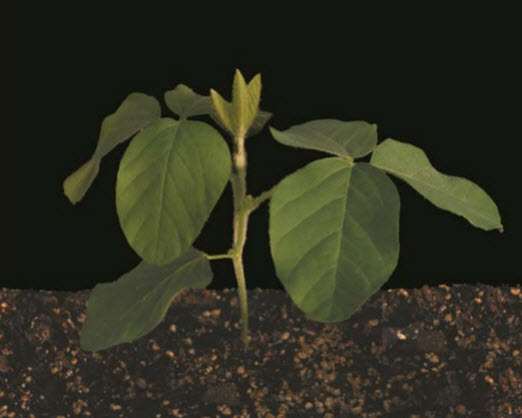
And even with late planted fields, farmers could see satisfactory yields.
“A uniform population as low as 100,000 plants per acre is still considered to provide good yield potential,” the report said. “Planting conditions have been reported to be good for late planted or replanted soybeans.”
If any soybean crops are to be rolled after planting, it should occur between the first and second trifoliate stage, said OMAFRA. Farmers should roll fields in the heat of the day when plants are flaccid.
Corn
Ontario’s corn crop is progressing nicely, with most fields ranging in the V3 to V5 stages, according to OMAFRA’s Field Crop Team.
However, some regions with heavier soils are experiencing replanting.
Producers have started sidedressing in many parts of the province.
And OMAFRA encourages farmers to check corn herbicide labels for temperature restrictions when spraying.
“Spraying of hormonal herbicides (i.e. dicamba) should be avoided when temperatures are expected to be above 25 C during or after application,” OMAFRA’s report said.
Cereals
Producers across the province are spraying winter wheat for fusarium head blight. Some farmers who did not apply a fungicide application reported stripe rust.
“Significant yield loss can occur in cases where disease pressure is very high,” OMAFRA said.
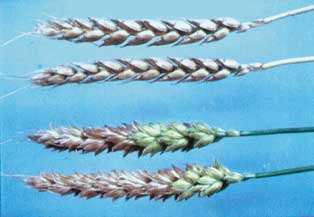
Fusarium head blight
Photo: OMAFRA
Canola
Most Ontario canola is planted and a majority of the crop is between the three and four leaf stage.
Some producers reported Swede midge in May. OMAFRA encourages growers to place and monitor traps.
Crop scouts have also discovered flea beetle and cabbage seed pod weevil in some Ontario canola fields.