Approximately 14 families made the move to Canada’s east
By Diego Flammini
Assistant Editor, North American Content
Farms.com
Approximately 14 Amish families relocated from southwestern Ontario to farms on Prince Edward Island over the course of the year, and so far they appear to be doing very well.
“They’ve done an amazing amount of building and renovating on the properties that they bought,” Brad Oliver, a real estate agent in Montague, told The Canadian Press. “They are very industrious and well-organized.”
The families started to arrive in P.E.I this spring. Their main reason for the eastward move was land prices.
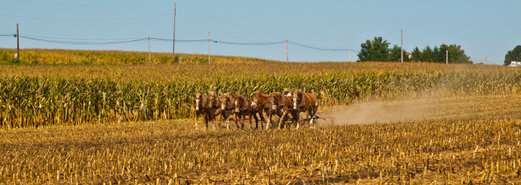
SOMATUSCANI/iStock/Getty Images Plus
“They’re coming from an area in Ontario where it’s $20,000 to $25,000 an acre for good agricultural land, and here it starts at $2,000 and goes up from there,” Oliver said.
Some families moved onto farms that were unoccupied, which has brought a sense of happiness to older farmers.
“The retired farmers around here have taken the Amish under their wing in a big way,” Mary Grant, who works at a local farm feed supply business, told The Canadian Press. “A lot of times when they come (into the store), they come with retired farmers from Kings County (in PEI) who spend time with them and take them places.