Some tweets directed at government officials
By Diego Flammini
Assistant Editor, North American Content
Farms.com
Farmers in Ontario are taking to Twitter to show why neonicotinoid-treated seeds are an important part of their operations.
Using hashtags including #grainbugs and #needneonics, farmers are posting photos of bugs lurking on their fields as a result of reduced neonic use.
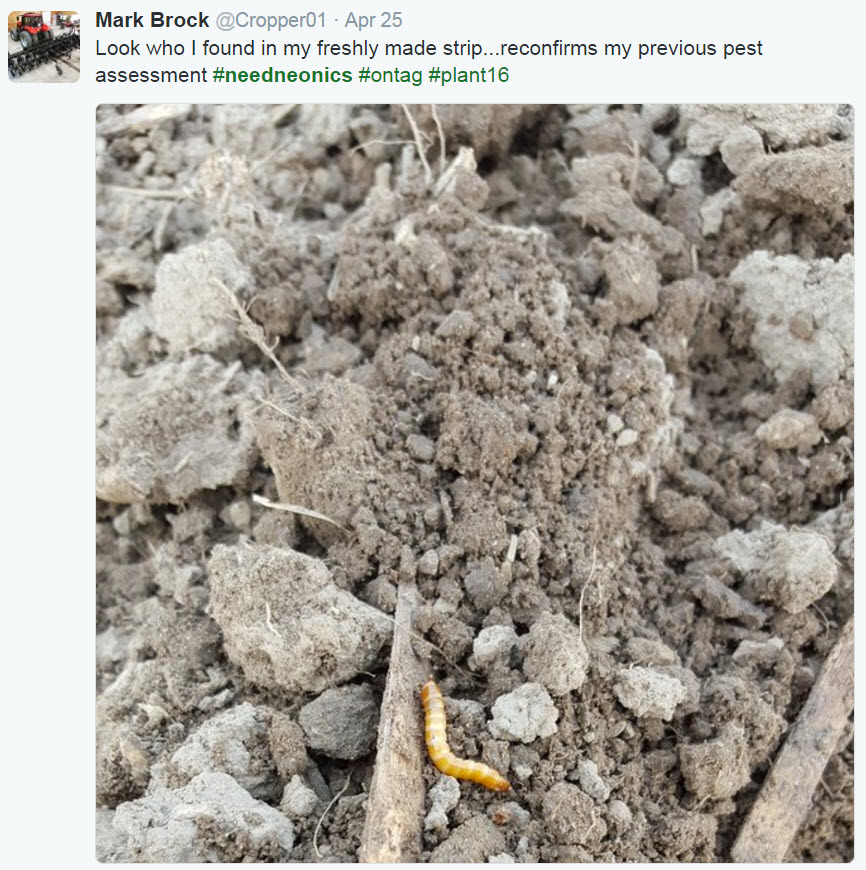
Tweet from GFO chair Mark Brock
Tweets have been coming in since April, but on Thursday afternoon, Grain Farmers of Ontario encouraged more farmers to do the same to “help everyone see (the) impact of new neonic regulations.”
Neonics have been a hot-button issue for farmers recently as the Provincial Government is introducing regulations in 2017 to reduce neonic usage by up to 80 per cent; as part of the regulations, some farmers will need to fill out a pest assessment to prove their need for neonics.
In April, Ontario’s Court of Appeal denied GFO’s request for an appeal when it comes to the regulations.
At the time, GFO chair Mark Brock called the decision “both frustrating and disheartening for myself, out farmer members, and the grain industry.”
GFO has since enlisted BDO to investigate the socio-economic impacts of the regulations.