A New Yorker donated to the Kansas Farm Bureau after a Kansas farmer donated to New York
By Diego Flammini
Staff Writer
Farms.com
An act of kindness from a retired Kansas farmer has resulted in his state’s Farm Bureau receiving its own gift.
A resident of New York made a donation to the Kansas Farm Bureau (KFB) Foundation after seeing stories about Dennis Ruhnke, a 72-year-old farmer from Doniphan County, Kan.
In March, Ruhnke donated his last N95 mask to New York to help a doctor or nurse on the front lines of the COVID-19 pandemic. The farmer’s donation included a handwritten note Governor Andrew Cuomo read aloud during one of his daily COVID-19 updates in April.
The New York donor, whose identity or donation amount hasn’t been revealed, made the gesture in Dennis and his wife Sharon (Ruhnke’s) name.
“We’re all in this together and I want to ‘pay it forward’ by donating to (the) KFB Foundation in honor of Dennis and Sharon, and I’m hoping you can let them know,” reads a handwritten letter on the Kansas Farm Bureau’s Facebook page. “We’re all going through tough times, but farmers always have tough times – and we need our farmers now more than ever – so I hope this helps someone a little.”
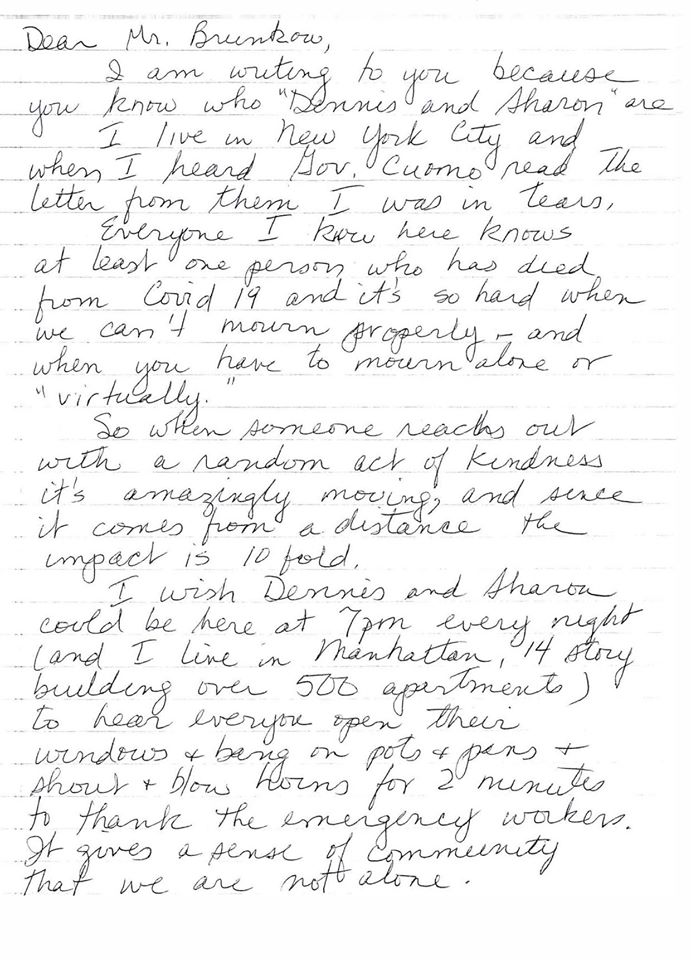
Users have shared the post 163 times hoping the Rukhnes would come across it. Sharon did two days ago.
“We need farmers. Just as much as nurses and doctors,” she wrote on Facebook. “Thank you for remembering us.”
Farms.com has reached out to the Kansas Farm Bureau for comment.