Prices will increase this week to cover growing program costs
By Kaitlynn Anderson
Staff Writer
Farms.com
Canadian pork producers will see increases in the prices of PigTRACE ear tags this week.
As of August 1, farmers will pay between 6.6 and 44.3 per cent more per tag, a program document shows. This increase is the first price change since 2014, when the program became mandatory for producers.
The Canadian Pork Council (CPC) will also increase the number of pricing categories from two to four groups “to offer more appropriate volume discounts in line with commercial prices,” the document says.
Producers will pay different prices per tag depending their order size and tag type, with the largest increases on the smaller quantities of tags.
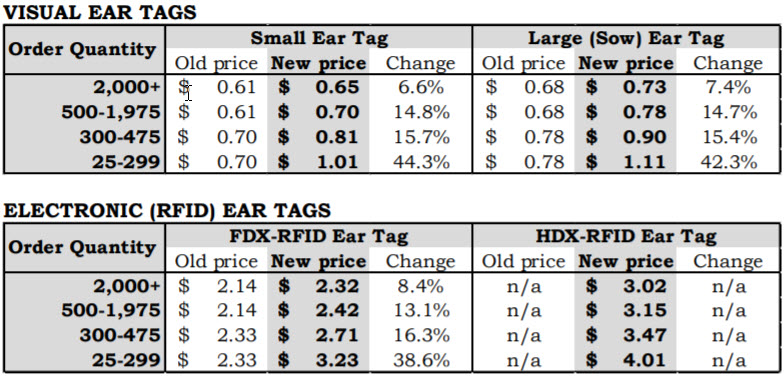
Source: PigTRACE document
As PigTRACE faced increased costs, the CPC made these changes to ensure the program remains financially sustainable, the document says.
The group also hopes the changes will encourage producers to order larger volumes of tags, Jeff Clark, director of PigTRACE Canada, told Farms.com today.
Over the past couple of years, individuals have placed many small orders of 25 to 250 tags. These quantities can be time-consuming to process, he said.
While producers will pay more money for tags under the new structure, the PigTRACE products will still have lower prices than other tags on the market, he said.
Evgeniy1/iStock/Getty Images Plus photo