Residents have received packages containing seeds from Asia
By Diego Flammini
Staff Writer
Farms.com
Americans in some states are receiving packages labeled as jewelry or other goods that instead contain seeds from Asia.
A total of 27 state ag departments including Iowa, Missouri, Florida, Virginia, Kansas, Kentucky, Ohio, Oklahoma, Louisiana, Utah and South Carolina are among the government bodies to issue warnings about the unsolicited goods.
The bags of seeds have been found in small envelopes that indicate the shipments originated in China or somewhere else in Asia.
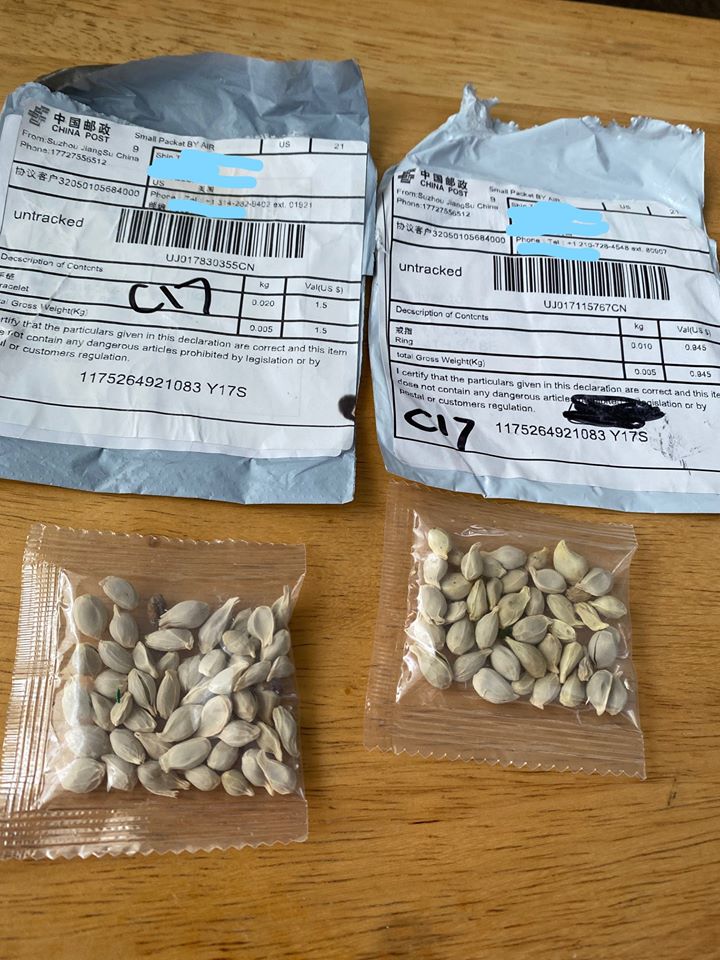
Washington State Department of Agriculture photo
Some officials believe the seeds are part of what’s known as a “brushing” scam.
The scam involves sellers using an address “to make it appear as though (the recipient) wrote a glowing online review of their merchandise, and that (the recipient is) a verified buyer of that merchandise,” the Better Business Bureau said. “They then post a fake review to improve their products’ ratings, which means more sales for them.”
It’s unclear at this point who sent the seeds or why, but officials advise against opening the bags, planting the contents or even throwing them away.
Seeds imported into the U.S. must have a phytosanitary certificate to ensure the shipment is free of any pests or diseases.
The USDA is investigating how these products entered the U.S.
“USDA’s Animal and Plant Health Inspection Service (APHIS) is aware that people across the country have received unsolicited packages of seed from China in recent days,” a USDA spokesperson told Farms.com in an emailed statement. “APHIS is working closely with the Department of Homeland Security’s Customs and Border Protection and State departments of agriculture to prevent the unlawful entry of prohibited seeds and protect U.S. agriculture from invasive pests and noxious weeds.”
Americans who have received a seed package should keep all packaging and contact their local ag department for further guidance on what to do.
In Florida, the state ag department has received calls from more than 150 people about seed packages.
And about 100 people in Louisiana received seeds that appeared to be from parts of Asia including Uzbekistan.
Officials in Louisiana are collecting the packages from residents.
“We are picking packages up,” Mike Strain, Louisiana’s ag commissioner, told the New York Times. “We’re sending our field personnel as soon as a call comes up.”
Some people have planted the seeds. Those plants will be destroyed, Strain added.