Ontario farm groups are calling on the government to put an end to urban sprawl on farmland
By Jennifer Jackson
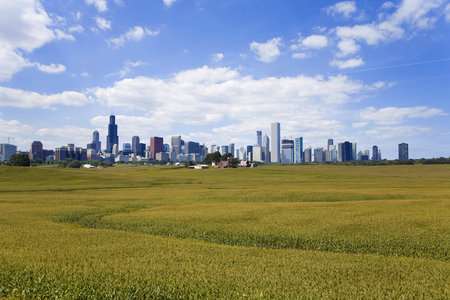
Ontario’s major farm groups – for the first time – are joining together to voice the need for the Province to implement strict boundaries on urban sprawl in the Greater Golden Horseshoe (GGH).
The Province released proposed changes to the Growth Plan for the GGH and Greenbelt in its Coordinated Land Use Planning Review. The farm groups feel the Province’s review fails to protect the majority of farmers and farmland in the region, according to a Nov. 30 release by the Ontario Farmland Trust and associated groups.
“Only five per cent of the province is good farmland – the majority of this land is concentrated in southern Ontario where we see huge development pressures,” says Matt Setzkorn, manager of land programs and policy for the OTC. With the current review, Ontario is “not identifying the source of these (land pressure) challenges – perpetual urbanization on some of the best agricultural land in the country.”
Setzkorn uses the Greenbelt as an example of a project that does not address urban pressure at the source.
Ontario has “put boundaries around some farmland (with the Greenbelt), when instead, (it) really should be putting boundaries on the urban sprawl,” he says. The Greenbelt “addresses only some farmers – why not protect all farmland?”
The Province has projected a growth of 4.5 million new residents by 2041 – a fact that some developers like to highlight when planning urban growth projects, according to the release. However, the land that municipalities have already designated for future development are sufficient for this growth, according to Setzkorn.
“We already have land 1.5 times the size of the city of Toronto that is designated for future growth – if boundaries are not put in place now, there will be more land allocated,” he says.
PlusPhoto/iStock/GettyImagesPlus
Ontario boasts a thriving agri-food industry; the cluster in the GGH is one of North America’s largest. This cluster generates $12.3 billion in annual economic activity, according to the release.
“Ontario agriculture is quite unique, and diverse; we need to find the right policy balance, and not just prioritize urban growth,” says Setzkorn.
Farm groups calling for an urban sprawl freeze are: the Ontario Farmland Trust, the Ontario Federation of Agriculture, the National Farmers Union-Ontario, the Christian Farmers Federation of Ontario, the Golden Horseshoe Food and Farming Alliance, Sustain Ontario, the Ecological Farmers Association of Ontario, the Preservation of Agricultural Lands Society, Food & Water First, FarmStart, Farms at Work, Land Over Landings, Langford Conservancy, the Simcoe County Greenbelt Coalition, and Sustainable Brant.