Agreement will support agricultural trade and humanitarian efforts
By Diego Flammini, Farms.com
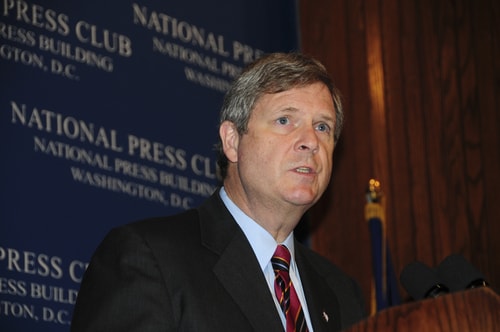
Following his mission in Istanbul, Turkey at the G20 Agricultural Ministers Meeting, United States Secretary of Agriculture Tom Vilsack travelled to Amman, Jordan to meet with their Minister of Planning and International Cooperation Imad Fakhoury.
During the meeting, Vilsack and Fakhoury signed an agreement that is geared towards supporting agricultural trade and development between the United States and Jordan.
"Jordan is one of our most effective, capable and steadfast partners not only in the Middle East, but around the world," Vilsack said. "USDA's food assistance will be used to relieve some of the economic burden that Jordan is facing as a result of the hundreds of thousands of Syrians who've been displaced because of the Syrian civil war."
The USDA will provide Jordan with nearly 100,000 metric tons of wheat, valued at nearly $25 million. The proceeds from the wheat’s sales will be used to improve agricultural production and economic growth. The commodities are being made available through the Food and Progress Program.
"The Obama administration remains committed to investing in the creation of economic stability and opportunity in the Middle East," Vilsack said. "As we have done in the past with Jordan and around the world, U.S. produced commodities will not only feed people but enhance agricultural productivity and trade.
The United States and Jordan have enjoyed successful trade relations since the Jordan Free Trade Agreement was fully implemented in January 2010. The agreement allows products made in Israel, Jordan, Egypt, the West Bank and Gaza to enter the United States without taxes.
In 2013, the United States exported $256 million in agricultural goods to Jordan. Rice, poultry and tree nuts were the largest exported commodities. The USA imported about $10 million of agricultural products from Jordan in 2013.
Join the conversation and tell us your thoughts on the new agreement between Jordan and the United States.