By Jamie Beyer
Harvest has continued on our farm, but after a few weeks of great weather while harvesting soybeans, we’ve had challenges. It was too warm part of the time we were harvesting sugarbeets, and then a major snowstorm interrupted corn harvest.

We finished cutting soybeans about Oct. 1. As we harvested more fields, the yields became more disappointing. The soybeans that were damaged by the hailstorm that hit us in July had very low yields, as expected. But we were disappointed in other fields that had looked good all year. Many of the fields farther from our farm ended up below average, ranging from 2.4 to 3.7 metric ton per hectare, or 35 to 55 bushels per acre. Though we thought we got timely rains late this summer, it still was a little too dry.
Sugarbeet harvest started really well on October 1, as expected. But then in early October it got too warm to pull sugarbeets. As mentioned before, sugarbeets must be harvested and stored at temperatures that prevent spoiling. We harvest them when temperatures are between 0°C and 13°C, or 32°F and 55°F. But when the days got warmer than that, our factory limited the time that we could harvest. For several days, we were only able to pull sugarbeets between midnight and 6 a.m., when temperatures were cooler. During that time, we lost some crop quality. While the yields were still good, the sugar content could have been better, had the weather cooperated.
Eventually the weather cooled off, and we were able to pull sugarbeets around the clock, if needed. But a harvest that typically takes 9 or 10 days stretched to 16 days. The unpredictable, crazy hours were hard on my husband Rodd and our crew. But we did finish sugarbeets on Oct. 16.
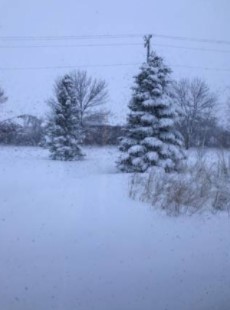
Corn harvest started about the same time as sugarbeets, again as we expected. And we made good progress, until we received about 30 cm, or 12 inches, of snow during the week of October 19. We’ve gotten snow in October before, but not this much. The snow forced us to pause harvest with about 1.5 days of work left. Wet, heavy snow like we received sticks to the corn leaves and cobs, which can plug up the combine. Most farmers in our area face similar challenges, needed 1 to 3 more days of good weather to finish harvest.
But our corn yields have been good. We started with our hail-damaged corn, which had very, very low yields. Thankfully, the rest of our crop was about average, yielding about 14.3 metric tons per hectare, or 225 bushels per acre.
Click here to see more...