Farms.com Home   News

Beefenomics: Corn-Feeder Cattle Price Connection

By William Secor

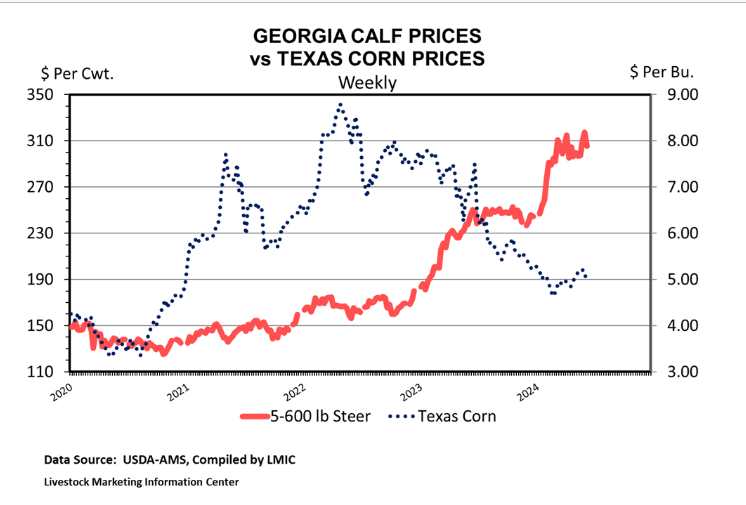
The ups and downs of summer weather are upon us affecting a host of agricultural markets. The focus of this note is looking at how feed costs can affect cattle markets, specifically corn prices. In general, if growing conditions are worse than expected (e.g., a drought), corn prices increase because markets anticipate a smaller than expected crop. In contrast, if growing conditions are better than expected (e.g., ideal weather), corn prices will fall because markets anticipate a larger than expected crop.
crop

Source : osu.edu

Trending Video

Season 6, Episode 10: Defining Resiliency and the Research Driving Swine Health Forward

Video: Season 6, Episode 10: Defining Resiliency and the Research Driving Swine Health Forward

Genetic research and new technologies continue to influence the future of swine health and production efficiency. In this episode, we explore how research and technology are being used to support stronger, more resilient pigs, while also improving overall production outcomes. In this episode, we are joined by Dr. Jenelle Dunkelberger, geneticist with Topigs Norsvin, to discuss both routine and emerging strategies for improving piglet, pig, and sow livability. She outlines two primary approaches to enhancing resiliency: gene editing and traditional selective breeding. Continuing the resiliency conversation, we also hear from Dr. Lucina Galina, director of technical research projects at the Pig Improvement Company. She shares insights into ongoing gene-editing work focused on PRRS, detailing the pathway to success, regulatory and practical considerations, and the questions that still remain as the technology evolves. Together, these conversations provide a closer look at how research, genetics and innovation are shaping the future of swine health and livability.