By Ashley Dean and Erin Hodgson
Black cutworm (BCW) is a migratory pest that arrives in Iowa with spring storms each year. It is sporadic and unpredictable, making it essential to scout to determine whether BCW larvae are present in a field and management is required. Because BCW is sporadic, it is usually not economical to use preventative insecticide applications; however, rescue treatments can be very effective if scouting reveals larvae are present. Even though cool, wet conditions have slowed planting progress throughout the state, BCW development is on track with previous years.
It may be even more important to scout this year, because delayed planting may result in the “perfect storm” for BCW injury: small corn plants (less than V5) in the field at the time larvae are large enough to cut corn plants. Moth flights into Iowa will continue throughout the month, so prolonged feeding may occur on young corn plants. Scouting for BCW larvae can be combined with early season stand assessments or scouting for other pests.
Predicting cutting dates
BCW moths lay eggs in and near crop fields, and larvae can feed on leaves or cut corn seedlings. Larvae must attain a certain size (4th instar) to be large enough to cut corn plants and cutting can occur until plants reach the V5 stage. We can predict when BCW will reach the 4th instar based on accumulating degree days and when a significant flight occurred. A significant flight occurs when eight or more BCW moths are captured over a two-night period in a pheromone trap. The Iowa Moth Trapping Network enlists the help of volunteers around the state to monitor BCW activity annually. You can keep up with the Iowa Moth Trapping Network with weekly updates posted to the ICM Blog.
Significant flights have occurred in most areas of the state. Counties that have reported significant flights include Taylor (April 13 and May 4), Buena Vista (April 22), Mills (April 22), Marshall (April 24), Mahaska (April 24 and May 4), Washington (April 24, April 29, and May 6), Lucas (April 29), Hamilton (May 2), Benton (May 5), and Polk (May 5).
Figure 1 shows the predicted cutting dates for BCW in each crop reporting district. These cutting dates are estimated by combining actual and historical GDD data. BCW trapping will continue throughout May, and any additional peak flights that occur will be included in our weekly ICM Blog updates.
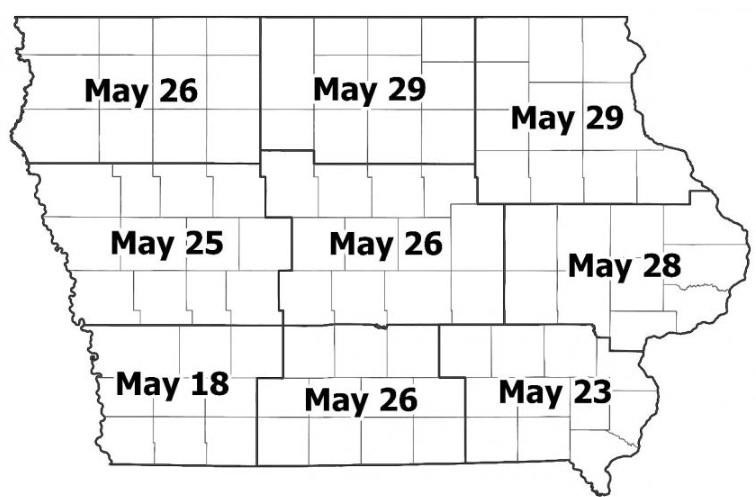
Figure 1. Estimated black cutworm cutting dates for each Iowa crop reporting district based on initial peak flights in 2022, as of May 11. These are estimates of when cutting will begin, but additional large flights may indicate prolonged feeding by black cutworm larvae.
Source : iastate.edu