By Arriaga Atucha Broeske and Conley Dan et.al
Cool, cloudy weather settled over Wisconsin this week, bringing frost advisories for the central and northern counties. Below-normal temperatures slowed plant and insect development, though mostly dry conditions with overcast skies permitted fieldwork to continue at a rapid pace. Planting of the 2022 corn crop advanced to 61% complete, 10 days behind last year and three days behind the five-year average. Currently, 26% of the state’s corn acreage has emerged. Soybean planting advanced to 49% complete, nine days behind last year but even with the average. A few determined farmers in southern Wisconsin even began harvesting the first crop of alfalfa.Rounds of rain and late-week thunderstorms are expected today, before dry weather with warming temperatures return for the first week of June.
Black Cutworm Damage Window Now Opening
The primary black cutworm damage window for seedling corn has opened in far southern Wisconsin. Localized infestations are a distinct possibility over the next 3-4 weeks based on the late timing of corn planting this spring. While black cutworm outbreaks are sporadic and unpredictable, the key factors that influence outbreak potential are late tillage and planting, which allow for weedy pre-plant field conditions that provide preferred egg laying habitat. Other conditions favoring black cutworm egg laying are excess crop residue in no-till fields, low spots in a field, and corn planted after soybeans (vs. corn planted after corn).
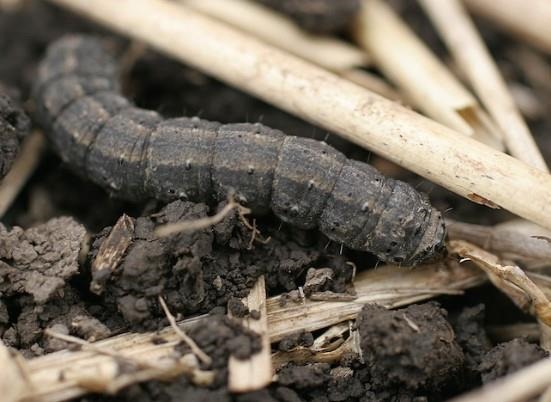
Heavy moth flights in April and May also increase the risk of spring cutworm outbreaks. DATCP’s black cutworm survey traps have collected a cumulative total of 767 moths at 30 monitoring sites since April 1. Although this year’s total count is not particularly high compared to previous “high moth” years, most of the moths (70%) were captured in the last three weeks, indicating the damage window could extend through late June.
All corn acreage should be closely monitored for cutworm feeding or below-ground tunneling injury from emergence until the five-leaf stage. Bt hybrids and corn treated with seed-applied insecticides are at reduced risk of damage but could still be affected under heavy cutworm pressure. The economic threshold for black cutworm is reached if 3% of plants have been cut and larvae are still present in the field. Early and timely detection of cutworm infestations is critical for rescue treatments to be effective.
Source : wisc.edu