By Bob Tritten
We have seen a strong trap catch of adult brown marmorated stink bugs in traps checked Sunday, Sept. 25, and Tuesday, Sept. 27, in half of the 10 Michigan State University Extension trapping sites scattered over eastern Michigan orchards. With the exception of one adult being caught in a trap last fall, this is the first brown marmorated stink bug trap catch we have seen across the region. Some traps had over 30 brown marmorated stink bugs, while others only had a few adults.
Earlier this summer, MSU set up a network of more than 80 trapping sites in orchards and vegetable farms across the state, with 10 sites here in east Michigan. Sites in our region where the brown marmorated stink bug trap catch occurred in the last few days were in Genesee, Lenawee, Oakland and Washtenaw counties. We have one additional site in Genesee County that maintains a set of traps; they have been catching a small number of brown marmorated stink bugs since early August.
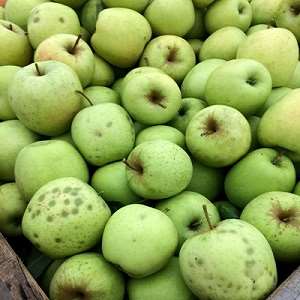
I have also seen some limited feeding damage in apples over the last week, mainly in Gala and Golden Delicious. This feeding damage most likely occurred in the last two to three weeks. Damage has been mistaken for bitter pit symptoms, which is related to a calcium disorder.
This late-season brown marmorated stink bug feeding damage may look different than early-season damage you may have seen in presentations and on websites. I have seen damage in Gala and Golden Delicious apples, and damage has been reported on the Ridge in Empire. Be on the lookout for damage that at first glance looks like bitter pit, but take a closer look. It is very difficult to tell the difference between bitter pit and brown marmorated stink bug injury. Bitter pit is usually concentrated on the calyx end of the apple and brown marmorated stink bug injury can be anywhere on the fruit.
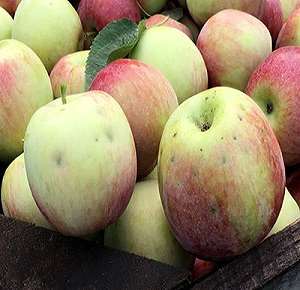
As you harvest apples and grade fruit, you need to be on the lookout for insects and damaged fruit. Brown marmorated stink bugs are rather allusive, so finding them on fruit or in trees may be difficult. Contact me at tritten@msu.edu, 810-244-8555 (office) or 810-516-3800 (cell) if you find brown marmorated stink bugs or need help sorting out damaged fruit or bitter pit damage.
Source: msu.edu