Pima cotton - valued for its high-quality strong fibers - made a splash in California's San Joaquin Valley in the 1990s, reports Hiroko Tabuchi in the New York Times.
“It's a just-add-water kind of location,” said Robert B. Hutmacher, a cotton specialist at the University of California's Division of Agriculture and Natural Resources. “Of course, just-add-water used to be much easier to achieve.”
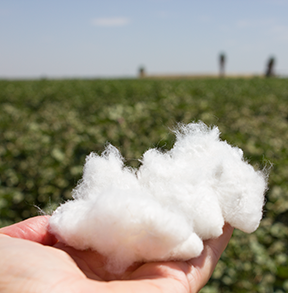
Pima cotton
Durable and lustrous, Pima cotton became the fiber of choice for premium shirts and bed sheets. Long hot, rain-free summers made the Central Valley an ideal location for the crop. But environmentalists wondered whether it made sense to plant the thirsty crop in the dry San Joaquin Valley, particularly one used for luxury clothing and bedding, not food, the article said.
“It's the world's finest cotton,” said Jim Neufeld, a third-generation cotton farmer in Wasco. This season, he planted 250 acres of cotton, down from a peak of 11,000 acres in the 1990s. “It simply doesn't fit into today's environment."
Source:ncsu.edu