By Alaina Lamp
Winter is here, and that means your horse’s diet and shelter may need adjustments. Dr. Scott Austin, an equine internal medicine specialist at the University of Illinois Veterinary Teaching Hospital in Urbana, offers winter horse care tips to keep your horse safe and healthy in cold weather.
Feed and Water
According to Dr. Austin, the most important aspect of winter care is access to plenty of hay. The average horse consumes 2% of their body weight in forage every day. In winter, their intake increases to 2.5% to 3% of their body weight. Eating hay helps horses maintain their body heat, even in low temperatures, because the hay undergoes fermentation in the large intestine and the fermentation process generates heat.
Water intake is another concern in winter. Adequate water consumption helps ensure that horses consume appropriate amounts of hay without increased risk of impaction.
“The water needs to be a minimum of 40 degrees for horses to drink sufficiently,” says Dr. Austin. To ensure that water troughs remain free of ice, Dr. Austin recommends bucket heaters. Automatic waterers with built in heaters should be checked frequently to ensure they are working properly.
Blankets and Shoes
“Normal, well-fed horses do not to require a blanket in winter if they have shelter,” says Dr. Austin.
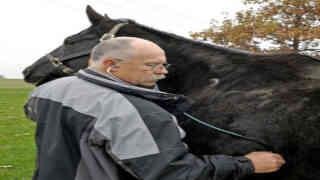
In fact, he says, blankets can even be detrimental. “Blankets will flatten the hair coat and impede its insulating function. You also have to contend with proper positioning of the blanket and which type of blanket to use.”
Some horses, however, may require blankets during colder weather. These include horses that have trouble maintaining body weight, body clipped, or are turned outside after living in a heated barn.
Dr. Austin also recommended that horses that are not working in the winter should have their shoes removed to decrease the risk of snow impaction. If shoes are necessary, snow pads can help prevent snow accumulation. Traction devices that are applied to shoes can exacerbate lameness in horses with arthritis in the lower limbs.
Best-Practices in Barns
Winter horse care also entails paying attention to the barn. Dr. Austin recommends making sure that there is good ventilation. “Proper ventilation prevents respiratory disease and reduces ammonia (from urine) and humidity in the barn,” he says. “Ammonia can be very irritating to the respiratory tract.”
Barns should also have a plan in case of a power outage. A generator and a flashlight may come in handy. To keep indoor water troughs from freezing, Dr. Austin recommends filling gallon jugs one-third to half full with a mixture of water and rubbing alcohol. The jugs will float, and the liquid inside won’t freeze. When horses nose the jug around, it breaks up ice that may have started to form on the surface of the water.
By anticipating concerns brought by winter conditions, you can keep your horse safe and healthy.
Source : illinois.edu