By Josh Maples
The latest Cattle on Feed report was released last Friday and reported a record high level of cattle in feedlots for any April going back to when data series began in 1996. The March 1st total of 12.1 million head was 1.7 percent above a year ago.
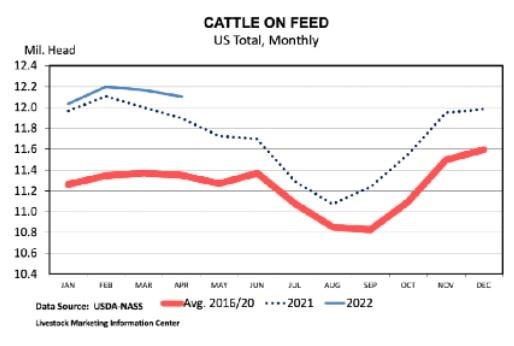
Placements were the big surprise in this report. Prior to the report, the average expectation from analysts was an 8 percent decrease in placements compared to a year ago. The actual number came in as a 0.4 percent decrease. Thus, the report showed many more cattle placed into feedlots than was generally expected. Cattle have continued to flow into feedlots despite the overall expectation of tightening supplies. Live and feeder cattle futures markets were $1 to $3 per cwt lower in today’s trading.
Marketings during March 2022 totaled 2 million head which is 2 percent below placements during March 2021. While lower than a year ago, this number was well anticipated unlike the placements total.
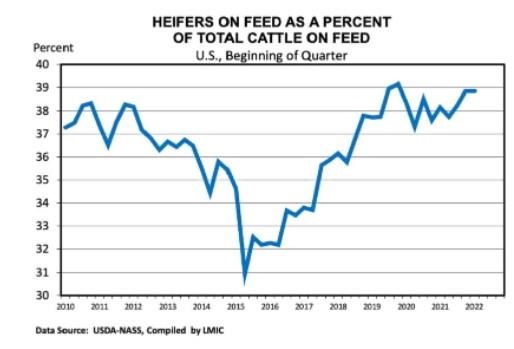
This report also included the quarterly mix of steers and heifers on feed. Of the 12.1 million head on feed on April 1, 7.54 million were steers and 4.56 million were heifers. This is a fairly large share (37.7 percent) of heifers on feed and suggests heifer retention is not approaching herd expansion levels. As shown in the chart below, the percentage of heifers on feed is higher than it was during the rapid expansion years. Combined with large beef cow slaughter totals, the early forecast is for 2022 to be another year of herd contraction in the U.S.
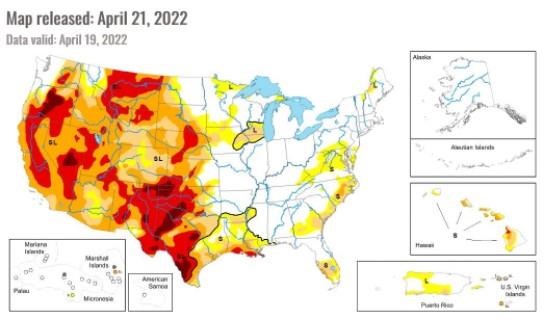
Pasture conditions and drought (see map below) are a very important factor right now and will be a key driver in cattle production and markets in 2022. USDA-NASS begins reporting pasture and rangeland conditions in May each year so we will soon get the first estimates.
Source : osu.edu