Competitive yields are a reality and High Oleic (HO) soybean varieties consistently perform as good or better than conventional numbers. With seven years of commercial trait development and a mature seed pipeline in place, growers have access to the varieties they need to raise trend yields with the added financial incentive of premiums up to 75 cents/bushel.
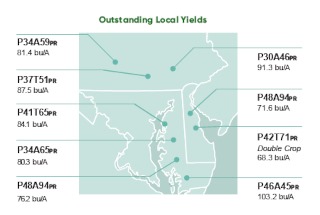
In field trials from 2018 to 2020, Pioneer® Plenish HO soybeans showed in-field performance on par with conventional varieties. High oil soybean varieties in Maryland trials showed a yield range between 76.2 and 103.2 bushels/acre, with trials in Pennsylvania yielding between 81.4 and 91.3 bushels/acre. Double-crop yield trials in Delaware showed a yield of 68.3 bushels/acre. Average soybean yields for those three states ranged between 46 and 57 bushels/acre in 2020, according to USDA-NASS data (Delaware, Maryland, Pennsylvania).
High oleic soybean varieties have the same germplasm as conventional soybean varieties, which means they offer the same agronomic attributes.
Click here to see more...