By James Jasinski
Other trapping locations have not reported an increase in activity yet (https://u.osu.edu/jasinski.4/pestvisualization/#linke). This annual caterpillar pest of sweet corn and tomato should have growers paying special attention to these crops for infestation, especially during the latter part of the season. Flights of CEW typically increase through the summer as the moth migrates into Ohio from southern states such as Louisiana, Texas and Mississippi. The caterpillar stage is known to attack silking corn and tomato fruit, especially when other susceptible hosts are not abundant.

CEW, aka tomato fruitworm, feeding on tomato.
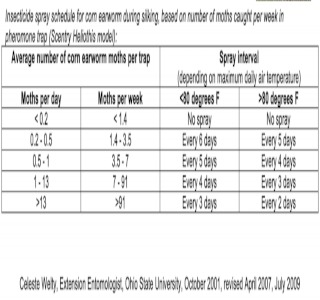
Moths prefer to lay eggs on fresh sweetcorn silk and can hatch and enter the ear tip as quickly as two days under ideal weather conditions, where they are no longer susceptible to insecticide treatments. Treatments for this pest should be made based on number of moths per day and daily temperature threshold of 80F. Use the chart below to determine the recommended number of days between insecticide application to protect sweet corn as it enters silking. Insecticide options can be found in the Midwest Vegetable Production Guide, remember to rotate insecticide classes to avoid resistance (https://mwveguide.org).
Want to learn more about monitoring for CEW? Check out this original video that reviews how to set up a trap to monitor for CEW (https://www.youtube.com/watch?v=W6b7OtUOo8Y&list=PL0HRPaZDLHyG53DPisl9iGTezcx815u-q&index=8).
There is also an updated version of how to monitor for several key moths in sweet corn on the OSU IPM YouTube channel https://youtu.be/X1jvQxx_fpc
Source : osu.edu