Cool temperatures and varying soil moisture have limited pasture and hay growth in northwest Iowa.
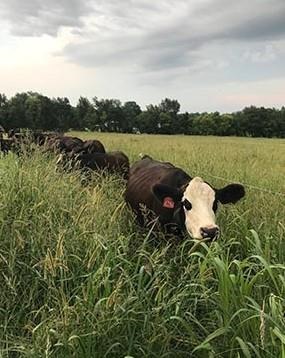
Each forage species has unique characteristics such as growing season, height, regrowth potential, yield, feed value, presence or absence of anti-quality components, and suitability for haying, grazing or silage, according to Beth Doran, beef specialist with Iowa State University Extension and Outreach.
“Fast-growing annual crops can provide short-term forage,” Doran said. “However, before making a final decision, producers are advised to check with their crop insurance agents about their forage plans.”
Traditional summer annual forages include sorghums and millets. Once soil temperatures are 65 F and increasing, sorghums and millets can be planted up to early July and used during summer and autumn. They will be ready for first harvest or grazing about 50 days after emergence.
Pearl millet and sudangrass are best suited for grazing because they regrow rapidly. To encourage good regrowth, do not graze shorter than a five- to six-inch stubble height.
For an emergency hay crop, foxtail millet would be the forage choice due to rapid dry-down, but plan for only one hay harvest yielding 2-3 ton of dry matter per acre at maturity.
Teff is gaining popularity as a newer summer annual grass for haying with yields of 3-5 ton of dry matter per acre at maturity. It can be harvested 45-55 days after planting and has rapid regrowth. To encourage good regrowth the cutting height should be 4-5 inches high. Grazing is not recommended due to its shallower rooting.
For fall grazing, most cover crop species (cool-season annual grasses, cereals, and brassicas) yield more forage when planted mid-summer. When planting after early September, cereal rye and triticale are better suited to the shorter growing season. Cereal rye has other advantages – it overwinters and is our earliest spring grazing crop.
If harvesting silage, forage sorghum and corn excel in yield and feed quality.
A word about anti-quality components: Prussic acid poisoning is a risk for sudangrass, hybrid sorghum x sudangrass, and forage sorghum when the plants are grazed or green-chopped at short heights (<18 inches for sudangrass; <24 inches for sorghum x sudangrass hybrids, and <30 inches for forage sorghum). Prussic acid also may be present during a severe drought or if grazing too soon after a frost. And if the growing season is dry, all annual forages can be high in nitrates.
Click here to see more...