By Christopher Redmond and Mary Knapp et.al
The recent high temperatures came at a particularly critical period for the Kansas corn crop (silking/tasseling). According to the USDA National Agricultural Statistics, as of July 12, 47% of the corn was silking. By July 19, that amount had jumped to 66%. Temperatures during the weeklong period were generally unfavorable, particularly with the warm minimum temperatures (Figure 1). For the 7-day window of July 12-19, parts of eastern Kansas had lows above 70 °F more the 40 percent of the time. Only the western third of the state and a small area along the Missouri river had two or less nights with minimum temperatures above 70 °F.
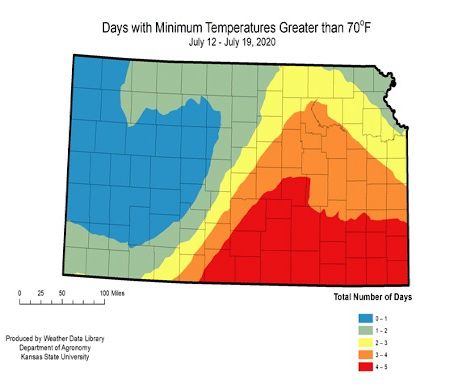
Figure 1. Total days with minimum temperature greater than 70 °F. Source: Weather Data Library
Heat stress will have more of an impact on corn at this stage of growth when combined with drought stress. Even in the absence of drought stress, heat stress alone can still increase the asynchrony between pollen shed and silk extrusion when corn reaches flowering time, ultimately reducing the final number of kernels (Figure 2). In addition, if stress conditions are prolonged, those effects will be reflected in a larger kernel abortion and impacts of the final size, kernel weight, negatively impacting final yields.
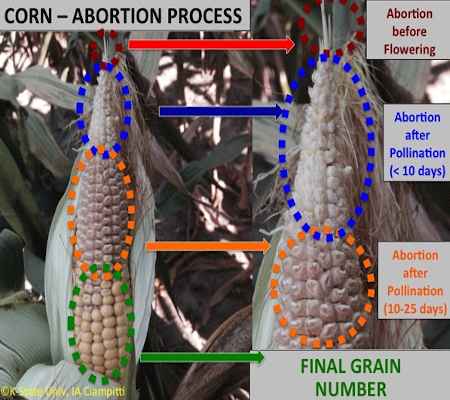
Figure 2. Ear abortion in corn from the combined effect of heat and drought stresses at the critical period around flowering.
Growing degree day tool on Kansas Mesonet
The Kansas Mesonet has a useful tool that tracks growing degree accumulation for multiple crops. With this tool, you can pick the planting/emergence date for the start of the interval. Selecting the graph will illustrate the growing degree accumulation for this season versus normal and the plant stage. You can access the page at: http://mesonet.k-state.edu/agriculture/degreedays/
The data updates every five minutes when you refresh the page and is available for all 65 stations.
Source : ksu.edu