Farms.com Home   News

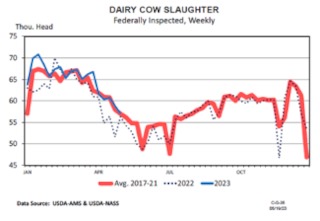
Dairy Cow Slaughter Above 2022

Year to date calf slaughter totals are down more than 15 percent, and nearly 40 percent below the five year average. Calf slaughter is primarily dairy bred calves that enter the veal market. The veal market has seen declining consumption for several years, and the pandemic accelerated that trend to some extent. Cold storage numbers for veal at the end of the first quarter showed supplies on hand are down 40 percent from last year.

Dairy cow slaughter has been above last year but is tracking very closely with the five-year average.
livestock

April’s milk production report from last Friday by USDA NASS showed the U.S. milk cow herd is shrinking. Total U.S. milk cows shed 16,000 head compared to the previous month but are still above a year ago even though milk prices are well below last year’s levels.

Source : iastate.edu

Trending Video

Evolution of Beef Cattle Farming

Video: Evolution of Beef Cattle Farming

The Clear Conversations podcast took to the road for a special episode recorded in Nashville during CattleCon, bringing listeners straight into the heart of the cattle industry. Host Tracy Sellers welcomed rancher Steve Wooten of Beatty Canyon Ranch in Colorado for a wide-ranging discussion that blended family history and sustainability, particularly as it relates to the future of beef production.

Sustainability emerged as a central theme of the conversation, a word that Wooten acknowledges can mean very different things depending on who you ask. For him, sustainability starts with the soil. Healthy soil produces healthy grass, which supports efficient cattle capable of producing year after year with minimal external inputs. It’s an approach that equally considers vegetation, animal efficiency, and long-term profitability.

That philosophy aligned naturally with Wooten’s involvement in the U.S. Roundtable for Sustainable Beef, where he served as a representative for the Colorado Cattlemen’s Association. The roundtable brings together the entire beef supply chain—from producers to retailers—along with universities, NGOs, and allied industries. Its goal is not regulation, Wooten emphasized, but collaboration, shared learning, and continuous improvement.