By Liz Stahl
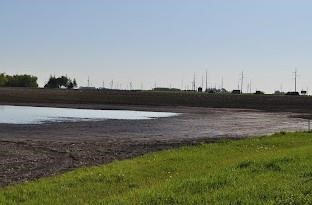
On top of a cold, wet start to the season, recent rains have led to further planting delays across SW MN and other areas of the state. If conditions are keeping you from wrapping up planting, the following are some points to consider:
Projected yield impacts
Both corn and soybean hold their yield potential pretty well when planted up until mid-May, especially when the season starts out as cool as it has in 2022. After this point, however, decreases in yield potential become more significant. If planting is delayed until May 20, long-term U of MN research shows yield potential in corn can be expected to range from 92 to 95% of maximum, and around 94% of maximum in soybean. If planting is delayed until May 25, yield potential for corn drops to around 87 to 92% of maximum, and to 91% of maximum for soybean. If planting is delayed until May 30, yield potential for corn drops to 82 to 89% of maximum, and to 87% of maximum for soybean. If planting is delayed until June 4, corn can be expected to yield 76 to 84% of maximum, and soybeans 82% of maximum. Soybeans can be planted throughout June, but yield potential drops to about 50% of maximum with a planting date of July 1.
When to switch corn maturities
It is recommended to stay the course with full-season adapted corn maturities until May 22. If planting is delayed until May 22 – 28, a hybrid 5 to 7 relative maturity (RM) earlier than full-season is recommended. Note if you started with a shorter maturity, you could hang onto your original selection a bit longer than this. If planting is delayed until May 29 to June 4, a hybrid 8 to 15 RM earlier is recommended; and from June 5 to 10, a hybrid 15 or more RM earlier is recommended.
When to switch soybean maturities
For soybean, the standard recommendation is to keep with your original maturity until June 10, at which point it is recommended to switch to a variety 0.5 maturity group (MG) earier. If you started with a very full season variety, consider making this switch by June 1. If you started with a shorter-season variety, you can hold onto this maturity until late-June.
Soil conditions
Corn is not very forgiving if “mudded in”. When the calendar and weather are working against you, it can be very tempting to push soil conditions to get the crop in. Results from a U of MN Extension survey of farmers after the 2019 season, where MN had an unprecedented level of prevent plant acres, demonstrate the importance of soil conditions at planting on yield potential. When adjusted for planting date, planting into “good” conditions resulted in the greatest reported yields of both corn and soybean. Corn yields dropped 2 bu/ac when conditions were described as “slightly wet,” and 10 bu/ac when conditions were described as “very wet.” When adjusted for planting date, soybean yield dropped 1.5 bu when conditions were described as “slighty wet”, and 2.5 bu/ac when conditions were described as “wet”.
Don't skip pre-emergence herbicides
When time is tight, it can be tempting to forgoe a preemergence herbicide and focus on planting. Effective preemergence herbicides are critical for control of problem weeds like waterhemp, especially since many of our waterhemp populations are resistant to multiple postemergence herbicides. Also keep in mind many preemergence herbicides used in soybean cannot be used once soybeans start to emerge. Be sure to check herbicide labels for options and prioritize weed control along with planting to help protect yield potential (and prevent weed escapes from replenishing the seedbank).
How late is too late?
How late should I try to plant if delays continue? The last recommended planting date in MN for corn for grain is June 5 in central and northern MN, and June 10 in southern MN. If harvesting corn for silage, the last recommended planting date in southern MN is June 20. Planting corn in June in MN carries much risk and depending on your situation, taking prevent plant or switching to another crop may be a better alternative. Results from our 2019 farmer planting date survey was very telling. Comments we received included: “Remind me to never plant corn in June again!” and “I should have taken prevent plant”.
Hopefully the weather will cooperate and farmers will be able to wrap up planting soon. If delays continue, however, check out out our Corn planting and Soybean planting pages on the U of MN Extension Crops website.
Source : umn.edu