Fall-Applied Phosphorus: A Rooted Investment
Revising Nutrient Management Plans for Maximized Efficiency
CARY, N.C. (AgPR) August 27, 2015 -- As commodity prices decrease and input prices continue to rise, farmers are seeking more efficient strategies for meeting a high yield goal that is in line with their production budgets. Fertilizer purchased in the fall is often discounted at lower prices, and when treated with AVAIL® Phosphorus Fertilizer Enhancer, return on fertilizer investments can be maximized.
After a fall application of AVAIL-treated phosphorus (P), the nutrient protection of AVAIL reduces tie up of that essential plant nutrient in the soil through the spring. With more available P, AVAIL can help boost crop yield results in corn, soybeans, wheat and alfalfa at a wide range of fertilizer application rates.
Research from the University of Minnesota, Kansas State University and the University of Illinois has shown AVAIL increases yield potential, regardless of the rate at which P is applied. Trials with AVAIL combined with dry P fertilizer documented strong corn yields are maintained even when P rates are reduced.
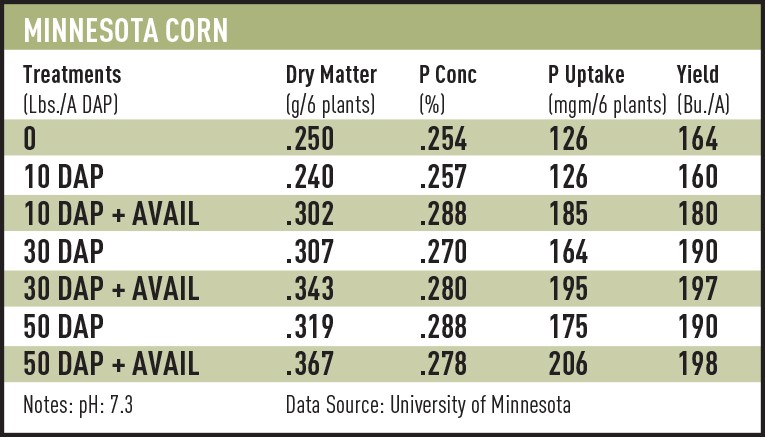
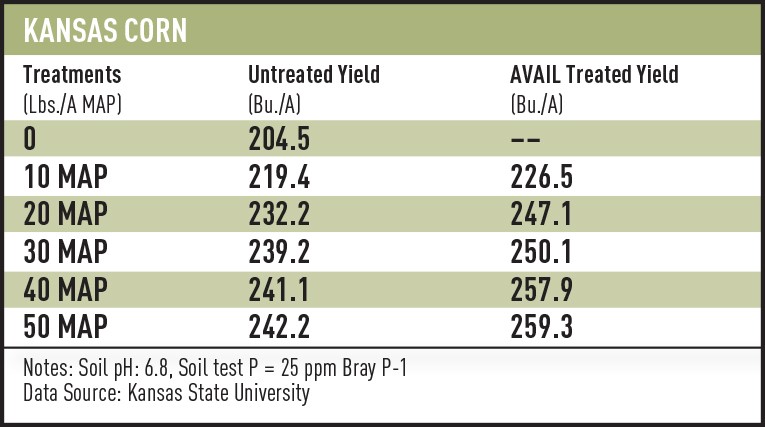
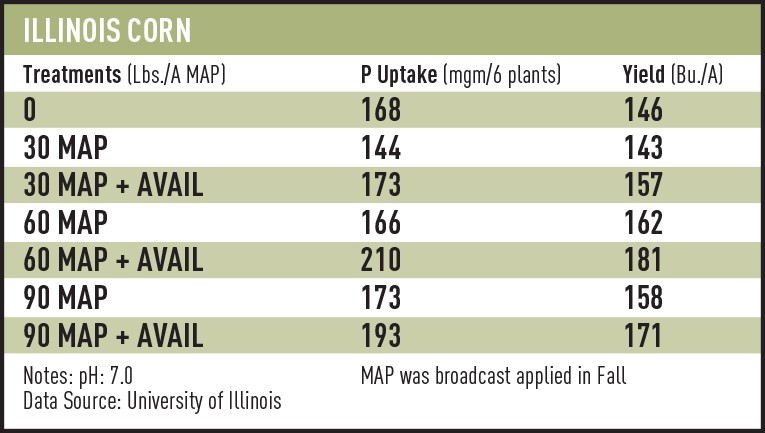
“Prices are important to farmers right now, and they will continue to be price sensitive throughout the fall season as we make our fertilizer recommendations,” says Scott Coon, executive vice president of agronomy for West Central Cooperative in Ralston, Iowa. “We are having that conversation with our customers this fall – adding AVAIL in the mix allows us to make a confident recommendation for possibly lowering phosphorus rates and saving them some money.”
Many other benefits can be found from applying P this fall, including saving time on workload during the planting season and a greater potential of soil incorporation into the root zone due to winter moisture.
Fall-applied phosphorus will remain in the soil for spring-planted crops, as phosphorus is generally an immobile nutrient,” said Ryan Bond, Ph.D., vice president, marketing & technical development at Verdesian. “The real issue is, phosphorus is bonding with positive ions during the winter, causing it to become fixed in the soil and unavailable to crops. The use of AVAIL focuses on improving the efficiency of your applied phosphorus and can help keep the nutrient from being tied up in the soil come time for planting and the following growing season.”
For the strongest ROI, Verdesian Life Sciences recommends developing a nutrient management plan with the International Plant Nutrition Institute’s 4R approach: use the right fertilizer source and apply at the right rate, place and time.
Click here to see more...