Farms.com Home   News

Green Leaves Still Sticking on Soybean

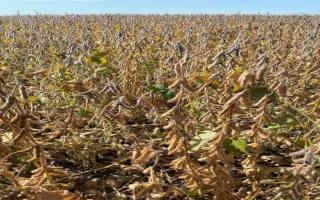
Fall is in the air and harvest is starting up across Iowa. It has been noted soybean are holding onto their leaves. This green bean effect is more often thought of as green stems, however, this year there are more leaves and petioles staying green and attached to the main stem. Take note this occurrence may mean that soybean grain is drier than expected based on plant appearance. This green bean effect can be caused by both biotic (stink bugs, thrips, viruses, etc.) and abiotic (weather, late planting, fungicides, etc.).

Management to avoid green bean syndrome is difficult in-season because of variety of causes. At harvest, the best solution to green bean syndrome is to harvest fields when the soybean seeds are at the proper moisture content. Make sure the sickle bar on the combine is sharp and well-maintained. Slower harvest speeds will be needed to account for more soybean biomass coming through the combine.
crop

Soybean at harvestable grain moisture with green (and yellow) leaves still attached. (photo credit: Rebecca Vittetoe)

Source : iastate.edu

Trending Video

Democratizing Gene Editing - Pairwise’s Vision for the Future of Agriculture

Video: Democratizing Gene Editing - Pairwise’s Vision for the Future of Agriculture

Pairwise has built its business around an idea that runs counter to how many companies approach innovation: make transformative technology easier to access.

In this Seed World interview, CEO Tom Adams discusses why broader access to gene editing could speed crop improvement, expand innovation opportunities and help agriculture address emerging challenges. He explains why Pairwise believes no single company can solve all of agriculture's problems alone—and why making advanced breeding technologies available to more organizations could accelerate progress across the industry.

The conversation explores how consumer trust influences technology adoption, why innovations like pitless cherries and seedless blackberries matter beyond convenience, and how future crop improvements could help address labor shortages, automation, harvest efficiency and other production challenges. Adams also shares his perspective on what the industry may be underestimating about the next wave of gene editing innovation.

Watch the full interview to hear why Pairwise believes agriculture is approaching an important inflection point for gene editing, and why the pace of innovation over the next decade could surprise the industry.

Topics Covered:

o Democratizing agricultural innovation

o Consumer trust and technology adoption

o The business case for sharing innovation

o Expanding innovation beyond major crops

o Next-generation breeding technologies