Farms.com Home   News

H5N1 Avian Flu Turns Up In US Poultry On Indiana Turkey Farm

Animal health officials in Indiana today reported a highly pathogenic H5N1 avian flu outbreak at a turkey farm, marking the first appearance of high-path avian flu in US poultry since 2020 and following dozens of recent detections in waterfowl on the East Coast.
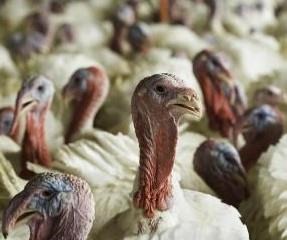
US poultry on Indiana turkey farm

The Indiana Board of Animal Health (IBAH) said the outbreak occurred at a commercial turkey farm in Dubois County, which is located in the southwest corner of the state. The birds were tested after about 100 birds died, the group said in an alert. The farm is under quarantine, and the IBAH is working with producers to monitor flocks statewide.

On its website, the IBAH said the facility housed 29,000 turkeys and that the H5N1 findings were confirmed on Feb 8.

The US Department of Agriculture (USDA) Animal and Plant Health Inspection Service (APHIS) also announced today that it has confirmed highly pathogenic avian influenza in a turkey flock in Dubois County—quite likely the same flock. It added that samples tested positive at Purdue University with follow-up confirmation testing done at the APHIS National Veterinary Services Laboratory in Ames, Iowa. Virus isolation is under way.

Birds on the property were depopulated and will not enter the food chain, according to APHIS.

The USDA said state and federal animal health officials, as part of an established response plan, are conducting additional surveillance and testing in the area. It urged all poultry producers to review their biosecurity practices.

Outbreak follows waterfowl detections

Since the first of the year, surveillance has identified the Eurasian H5N1 strain in waterfowl in several East Coast states. Similar events were reported in poultry and wild birds in Canada's Nova Scotia and Newfoundland provinces. The same virus has fueled outbreaks in other parts of the world, leading to large poultry losses, especially in Europe.

The United States' last highly pathogenic avian flu outbreak in poultry occurred in 2020 and involved the H7N3 strain, which was part of activity that also involved a low-pathogenic form of the virus that hit turkey farms in North Carolina and South Carolina. Indiana reported its last highly pathogenic avian flu outbreaks in 2016 when 11 farms, also in Dubois County, were affected by H7N8. The event led to the loss of 400,000 birds.

A large US outbreak from December 2014 to June 2015 that killed more than 50 million chickens and turkeys in 21 states involved the H5N2 and H5N8 strains.

Indiana ranks third in the country in turkey production.

Source : umn.edu

Trending Video

2025 USDA December Crop Report a “Dud” + Trump $12 Billion U.S. Farm Aid

Video: 2025 USDA December Crop Report a “Dud” + Trump $12 Billion U.S. Farm Aid


The USDA December crop report was friendly corn, neutral soybeans and bearish wheat. The USDA did surprise and increase the 25/26 U.S. corn export forecast to a new record high at 3.2 billion bushels now up 12% vs. last year vs. prior at +9% vs. the export pace to date up 30% the best in 10 years even higher than 20/21! The USDA left the 25/26 U.S. soybean export pace unchanged at 1.635 billion bushels. Higher global wheat supplies will remain a weight and headwind for wheat into year end and start of 2026.
Mexico is now the #1 buyer of U.S. corn, soybeans (usually China), wheat and pork!
USDA also released its long-term early projections but expect more changes by February of 2026.
Trump announces a $12 billion U.S. farmer aid package to be paid out by February 28, 2026. This helps no one but the ag banks, farm equipment companies, seed and fertilizer companies. It does prevent more farmer bushels from being sold near-term but is not bullish grain prices long-term. The Trump administration should focus on increasing U.S. domestic demand and propping up grain futures so farmers can cover their higher costs, up since COVID of 2020.
The China U.S. soybean purchase tracker now stands at 4.521 mmt or 38% of the 12 mmt promised by China at year end or is it end of February or the growing season? Why the discrepancy vs. the fact sheet. The optics are poor for the Trump administration.
After surging to contract highs U.S. natural gas futures plunged over 30+% in just 5-trading days!
Silver traded to new record highs as the debasement and de dollarization trade continued but technicals remain overbought near-term.
Soybean futures remained in correction mode after the funds went record long futures on Nov. 19 +233,000 contracts but the $10.80 support should hold into year end when the fund profit taking/liquidation comes to an end from the year end, end of month and end of quarter selling.
The U.S. Fed cut interest rates for the 3rd time by 25 basis points to a range of 3.50 – 3.75% and they will only cut one more time in 2026 and once in 20267/ but when Powell is gone next April the replacement is willing to cut more aggressively and we could see U.S. interest rates fall to 2.0% very bullish for ag and stocks as it could reignite inflation into 2027.
After 2 months of being drier than normal in Brazil the rains have finally arrived for the 1st half of December, and a record crop is still in the cards but if this pattern continues and verifies it could start to delay the harvest. Argentina after being too wet has turned dry but they are too small, compared top Brazil in the grand picture.
The Canadian dollar surged to $0.73 after better-than-expected employment data with 180,000 new jobs in the past 3-months and 3rd quarter GDP at +2.6% but this could be short-lived.
The latest CFTC report as of 11-19-2025 reported a record long fund position in soybeans at +233,000 contracts when 2026 March soybean futures peaked on 11-19-25 at $11.724/bu.