By Jason Hartschuh
The greatest challenge with winter annual cereal forages for many producers is managing harvest timing to maximize quality with spring rain fall events that not only delay custom harvesters but also cause your perfectly timed harvest to come to a halt. One goal should be to harvest at least some of your winter annuals at the highest quality possible unless your operation only needs low quality forage.
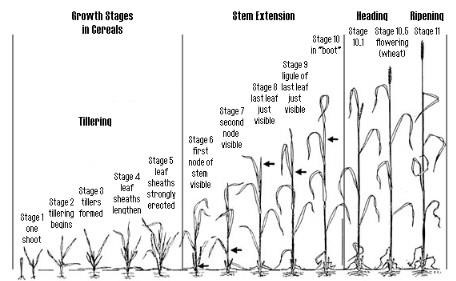
Figure 1. Feekes growth stages in cereals.
Diversifying to multiple species is one of the best risk management practices. Planted on the same day, four species we have been comparing flowered over a 3 week period. These trials were conducted at the Ohio State University agricultural research stations in Fremont and Jackson Ohio, allowing us to capture two very different growing conditions each year. We are evaluating cereal rye, triticale, barley, and wheat forage yield and quality of at an ideal harvest timing of Feekes 10 (flowering head in the boot and a delayed harvest at Feekes 10.5 (flowering stage). Figure one shows the growth stages of small grains.
We have found not only differences in rate of maturation but also in tonnage between species harvested at the same maturity stage. On average, most species put on half a ton more dry matter as they mature from Feekes 10 to 10.5, but triticale added over a ton of dry matter (Figure 2). Cereal rye and triticale had a similar yield of 1.25 tons average across all locations but had a low of .75 ton to over 3 tons per acre as location averages. The lowest yielding location had lower tillers experiencing excessive winter and spring rainfall. At Feekes 10.5, triticale had the highest yield averaging 2.75 tons across all locations and a high of 5 tons at one location one year.
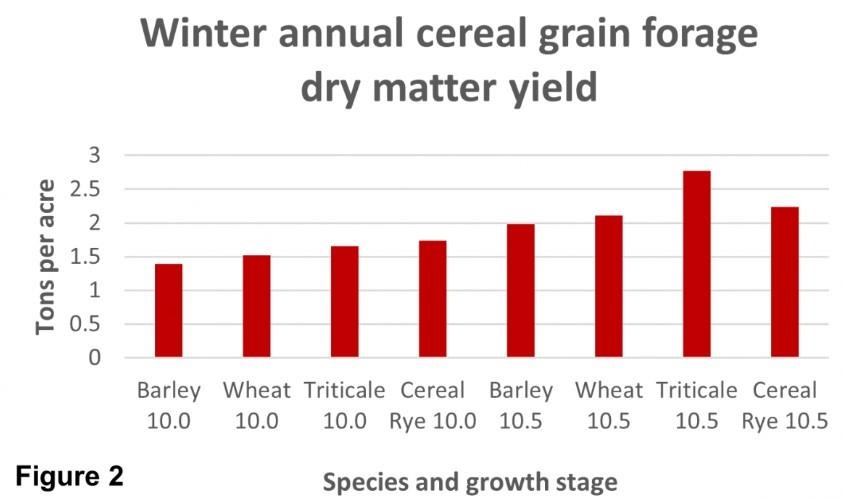
Figure 2. Winter annual cereal grain forage dry matter yield
While forage yield is critical, another important part of the risk management decision is how quality declines as the species matures. There was a similar decline in crude protein of about 2 percent with no significant difference in crude protein percentage between species, only between harvest dates. Neutral Detergent Fiber (NDF) and Total Digestible Nutrients (TDN) were a different story (Figure 3). These two nutrients moved inverse of each other with TDN declining and NDF increasing from the early to later harvest timings, representing a decline in quality. TDN which is one measure of energy was the highest for wheat at both harvest timings. Harvesting at Feekes 10 had the highest TDN and all species declined in TDN when harvest was delayed to Feekes 10.5. Barley had the least quality decline of all species. Wheat stands out as having the greatest TDN. This is followed by triticale and cereal rye at Feekes 10 with NDF increasing about 10 points as both matured.
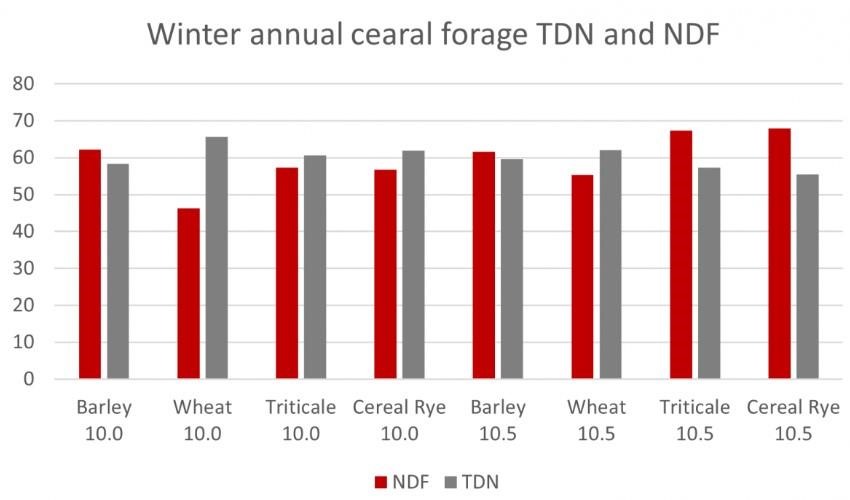
Figure 3. Winter annual cereal forage TDN and NDF
The optimal maturity stage to harvest winter annual cereals will vary by class and stage of the livestock to be fed, with dairy and growing animals needing forage with higher nutritional value like Feekes 10 in this experiment. Even when higher quality forage may not be the goal, do plan to harvest some at prime quality and then accept the lower quality when the weather forces a delayed harvest. Otherwise, you may plan for medium quality and end up with all low quality “straw-like” forage. For more detailed individual trial information check out the 2019, 2020, and 2021 eFeilds at https://digitalag.osu.edu/efields
Source : osu.edu