By Kerry Sheridan
Dairy farms in Florida have been in steep decline, and recovering from Hurricane Ian is a daunting prospect. But farmers say they must find ways to survive.
A cow moos in distress from a distant barn, as sprinklers shower water on those that crowd into one of the shelters that remains standing at Dakin Dairy Farm in Myakka City.
Owner Jerry Dakin says Hurricane Ian completely destroyed three of the farm’s open air shelters. The other five barns had parts of their roofs blown off.
"We've had over 250 animals that have died here," Dakin says.
"In my lifetime, the most I've ever lost was maybe 10 baby calves or something. I have never lost this many animals. My brother's down the road, he's (lost) well over 300. We've never seen something so stressful on these animals. It's just, it's unbelievable."
Jerry Dakin was born and raised in Manatee County, and is the owner of Dakin Dairy Farm.
As of Sunday, Dakin had lost 12 percent of his herd of milking cows in the storm. He says many of the deaths were stress-related.
Workers piled up the dead cows to keep them away from the healthy ones. The state is sending an incinerator to help dispose of the carcasses, says Dakin.
In another pasture, some cows wade through water that floods the side of the road.
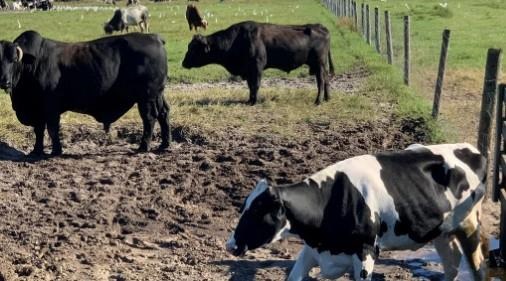
Some fields flooded after Hurricane Ian moved inland, and dumped heavy rains.
The farm lost power from Wednesday until late Saturday. Two generators powered machines to milk the cows, but the milk couldn't be kept cold, and had to be thrown out.
In a business that was already hard, Dakin has a lot on his mind.
"I mean, we have some insurance but the challenging thing is with the inflation of all the materials, it's gone up," he says.
"I'm at a point, do I -- What do I do here? Because this industry has just not been the greatest industry here."
Source : usf.edu