By Lindsay Mitchell
Farmers for Soil Health
Funded at $95 million, the Farmers for Soil Health (FSH) project will incentivize farmers to plant additional acres of cover crops. The FSH collaboration includes soy checkoff, Pork Checkoff, National Corn Growers Association and American Soybean Association, resulting in a farmer-led cover crop program that advances the use of soil health practices, meets sustainability goals, and improves farmer profitability.
FSH’s goal is to encourage farmers to expand their adoption of cover crops to 30 million acres by 2030. IL Corn along with Illinois Soybean Association (ISA) and the Illinois Pork Producers Association - are partners in this project via their national associations, but also look forward to contributing the direct farmer conversation and mentorship that will empower the additional planting of cover crops in Illinois.
Field to Market
A second climate-smart proposal by Field to Market is funded at $70 million and includes the Precision Conservation Management (PCM) program as a valued partner. PCM is a premiere conservation program offered by IL Corn and ISA, providing conservation adoption advice and reviewing financial outcomes from conservation adoption. PCM looks forward to being the partner that will interface with Illinois farmers to deliver innovative financial initiatives to increase conservation adoption.
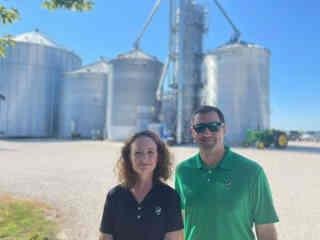
“Via a letter of support, IL Corn promised an additional $100,000 of funding and $50,000 of in-kind services for the Field to Market Innovative Finance Initiative project. We are heavily invested in climate-smart programs, vetted by farmers and workable for farmers,” said IL Corn Growers Association President Marty Marr, a farmer from New Berlin, IL.
“The transition to climate-smart agricultural practices is a journey that many farmers cannot undertake alone,” said Field to Market President Scott Herndon. “We are incredibly grateful to be selected as a recipient of this funding, as it allows us to increase the availability of innovative strategies that reduce the financial and agronomic risks for farmers in adopting climate-smart practices.”
Out of an original budget of $1 billion, the USDA Partnerships for Climate-Smart Commodities program awarded $2.8 billion in grants to 70 selected collaborative projects and partnerships. Ultimately, USDA’s anticipated investment will triple to more than $3 billion in pilots that will create market opportunities for American commodities produced using climate-smart production practices. These initial projects will expand markets for climate-smart commodities, leverage the greenhouse gas benefits of climate-smart commodity production and provide direct, meaningful benefits to production agriculture, including for small and underserved farmers.
Click here to see more...