By Anne Dorrance
As farmers and consultants have been out checking their soybean stands, they are finding spots on the leaves. The most common spotting on the unifoliates and first leaves is caused by Septoria glycines. This is a fungus that overwinters on the previous soybean crop residue and in modern cultivars it is limited to the lower canopy. We’ve done extensive studies on this disease over the past decade and I have yet to attribute an economic value in managing this. We did this one experiment where put chlorothalonil on every week (not a legal application but for research purposes only) and could only measure a 3 to 4 bu increase when the soybean plants were totally clean of this disease. Secondly, applications of herbicide plus fungicide did not manage this disease throughout the season nor do the R3 applications. At todays’ fungicide application costs and soybean prices, this is a hard one to even break even on.
Septoria brown spot
The one disease we have gotten substantial response to fungicide applications, is with frogeye leaf spot. There are a few high yielding soybean cultivars that are very susceptible to this disease. Yield losses of 8 to 35 bushels have been recorded. The fungus that causes this disease can overwinter in Ohio, this was confirmed by studies in Illinois as well. This fungus, Cercospora sojina, can also spread via large storm fronts, hurricanes from southern states where it can build up and the spores can be carried to new areas. This happened in 2005 and again last summer based on my own scouting of test plots. The symptoms are gray centers surrounded by a deep purple circle which forms the lesion. Under high moisture conditions,the spores of the fungus will form in the lesion on the underside of the leaves, actually look like whiskers. There are a few herbicides, adjuvants, foam markers that under the right conditions will cause similar looking symptoms. The easiest way to check is to place leaves with these symptoms in a plastic bag and see if they form the whiskers – or spores overnight. These bags just need humidity – not a lot of free water. Also note, this fungus will infect new leaves and if it is established with every rain event there will be continual infections of the new foliage.
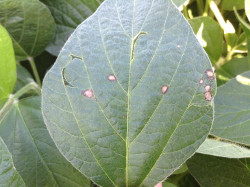
Frogeye
To manage this disease, foliar applications at R3 have been very good in Ohio at managing this pathogen. One note is that we have documented that strobilurin resistance is here in Ohio, so if you have any questions please send us these leaves, we do have time to test the fungicide sensitivity before you will need to spray.