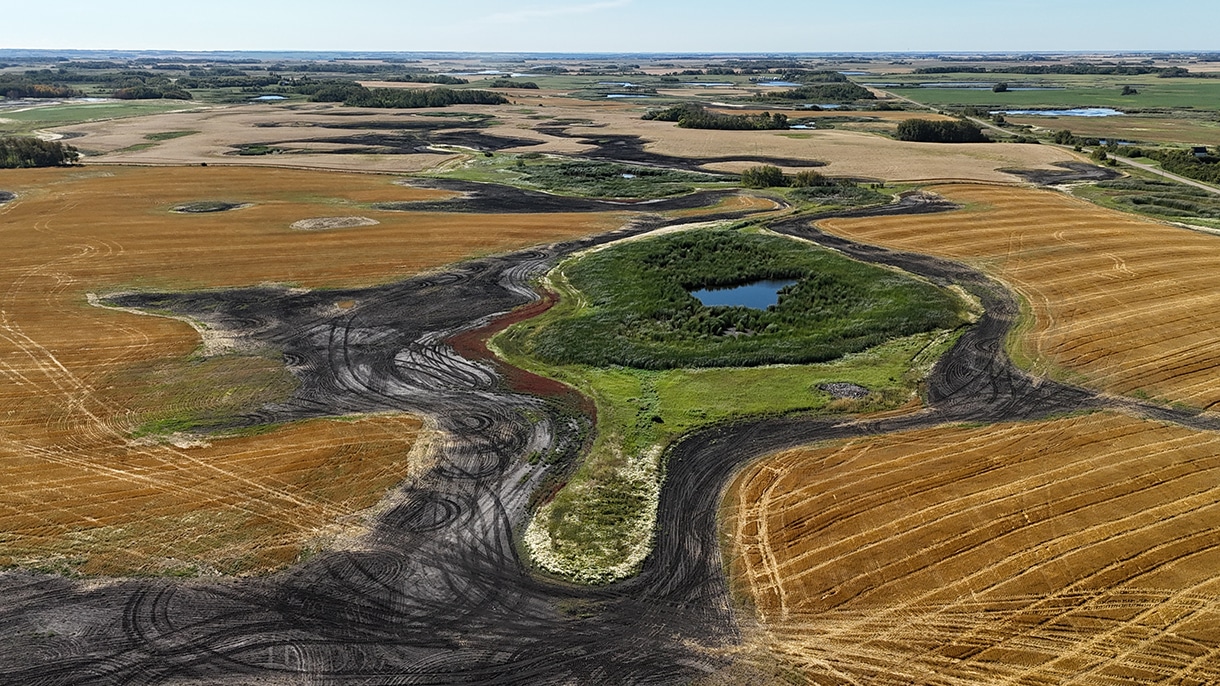
Most farmers in southwest Manitoba contend with marginal acres – sometimes as much as 20 percent of their land – where the crops grown on those acres won’t pay for the input costs.
“The numbers are higher than you might expect,” says Sam Robinson, a research scientist who studies sustainable agriculture for Ducks Unlimited Canada (DUC). “Common causes of marginal acres are too much or too little water, extra salinity and soil compaction. Weeds are another big one.”
Marginal acres can reduce your farm’s overall crop yield and profit margin. Using data from Manitoba Agriculture’s 2025 Cost of Production Guide, DUC is urging farmers to address unproductive patches and get a better return on investment (ROI) in the process.
Appleyard worked with 48 farmers in southwest Manitoba in the last crop year to rehabilitate more than 1,200 acres through DUC’s Marginal Areas Program. Those producers pocketed nearly $200,000 in program incentive payments.
“DUC offers Manitoba farmers $200 per acre to seed marginal acres to forage,” says Robinson, “so there’s an economic incentive. The environment also benefits because the new growth will provide habitat for birds and increase biodiversity. The ultimate goal is to have a stand that establishes well and holds its ground against the common problems.”
Click here to see more...