By Brandelyn Twellman
Many factors impact soybean quality, making bean characteristics variable from year to year. The makeup of a soybean is affected by the growing season, its weather and where the crop is planted geographically. Each year, a survey is conducted to analyze the quality of U.S. Soy commodity beans.
How did this year’s crop measure up? Seth Naeve, associate professor and extension agronomist at the University of Minnesota, presented an overview for participants at both the Northeast and Southeast Asia U.S. Buyers Outlook Conferences, hosted virtually this year.
Naeve first explained the effect of environmental impacts on soybean protein and oil. While climate affects the long-term quality of soybeans, weather affects quality fluctuations that occur year to year.
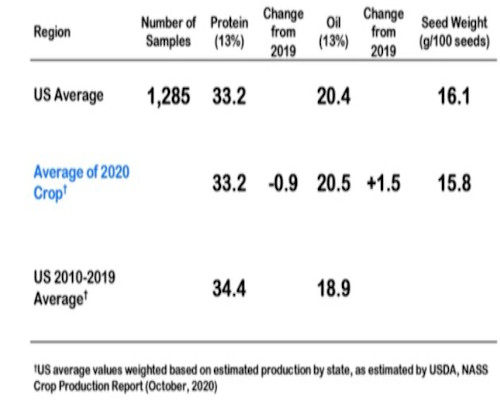
Of the 1,285 U.S. Soy growers who returned samples for the study, many reported the 2020 growing season started too wet and ended too dry. Naeve said this weather pattern is the recipe for low protein in soybeans. Results of the survey support this anticipated result.
Some results of the survey were to be expected, while others surprised Naeve. While protein and oil typically vary geographically, they tend to have an inverse relationship. This year, protein concentration was down and oil concentration was up, but there was more than a one-to-one tradeoff.
Click here to see more...