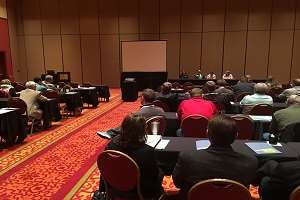
Kicking things off at the Oklahoma Pork Congress in Norman Friday, was National Pork Board CEO Bill Even, who gave attendees an update on the NPB’s recent activities since the former South Dakota Secretary of Agriculture accepted his new role roughly seven months ago. Radio Oklahoma Ag Network Associate Farm Director Carson Horn was there to speak with Even about some of the changes he’s made and his outlook on where the US pork industry is headed.
“The National Pork Board has got a strategic plan that really is focused on those three pillars - how do you build consumer trust, how do you grow production sustainably and then how do you grow demand as well,” he said. “Those are in line with our statutory obligations.”
In order to best serve the producers that fund the NPB, Even has taken measures to meet goals guided by those three missions, more efficiently and effectively, by merging and streamlining certain operations within the organization. Part of this effort, entails reviewing and refreshing the NPB’s domestic marketing tactics and strategies.
“One example of something the Pork Board has done quite well is our emphasis on multicultural marketing, particularly speaking with the Hispanic population in the US,” Even reported.
According to him, the Caucasian demographic is only projected to increase over the next several decades by about 1 percent. On the other hand, the Hispanic population is expected to grow by nearly 160 percent.
Click here to see more...