By Daren Mueller
Iowa State University Extension and Outreach specialists contributed to two new publications recently published by the American Phytopathological Society (APS), A Farmer’s Guide to Corn Diseases and A Farmer’s Guide to Soybean Diseases. These publications, specifically for corn and soybean farmers, provide easy-to-read disease listings and overviews, basic instructions for using diagnostic and scouting tools, and non-technical management recommendations.
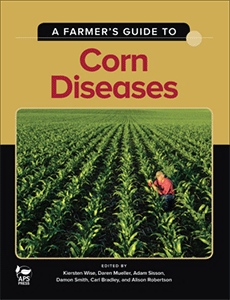

“These publications are intended to help farmers maximize their yield and economic return through correct corn and soybean disease diagnosis,” said Daren Mueller, assistant professor and extension specialist in plant pathology and microbiology at Iowa State University.
Thirty-three experts from more than 20 universities, agencies and companies collaborated to produce the material for a particular audience.
“The books are unique because they were written with farmers and crop scouts in mind,” said Alison Robertson, associate professor and extension specialist in plant pathology and microbiology at Iowa State University. “For example, each book includes a key that can be used to help narrow down the diagnosis, and maps that enable growers to easily tell if the disease has been reported in their region.”
The information listed for each disease includes symptoms and signs, conditions that favor disease, similar looking diseases and disorders, and a review of basic management options. These general management recommendations serve as a starting point, and localized treatment options should be discussed further with extension or crop specialists specific to the state or area.
Source:iastate.edu