Specialty crop growers and their workers, schedules, expenses, incomes, and crops are impacted by air and soil temperatures on and near their farms around the clock, even when production is suspended for the season. Temperatures never rest in influencing a long list of soil, crop, production, and cost-revenue variables. This fact explains why so much time, effort, and money are spent measuring, analyzing, interpreting, and presenting temperature data in ways useful to growers and others.
Two new resources outlined below will interest fruit, vegetable, and other growers.
The USDA-ARS manages information available at https://planthardiness.ars.usda.gov/pages/view-maps.
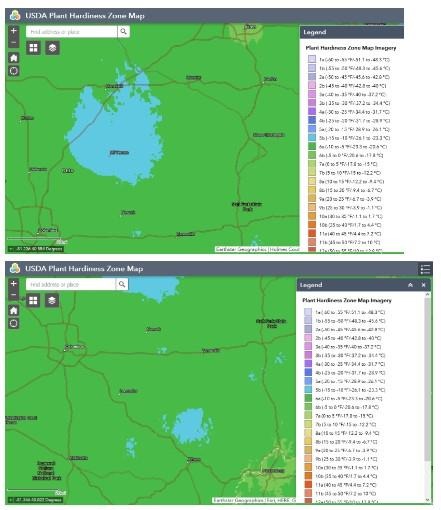
The page includes updated maps of plant hardiness zones available at high resolution (e.g., see the images below and scale bars). Maps can be downloaded, if needed. Plant hardiness zones affect cash and cover crop selection and performance, overall seasonal scheduling, and other variables.
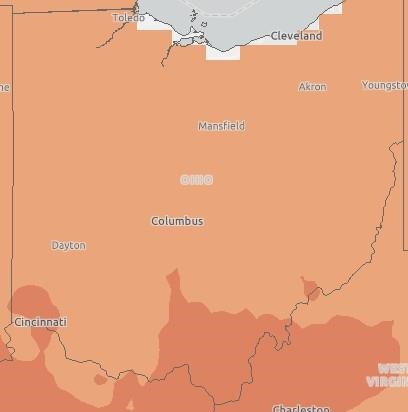
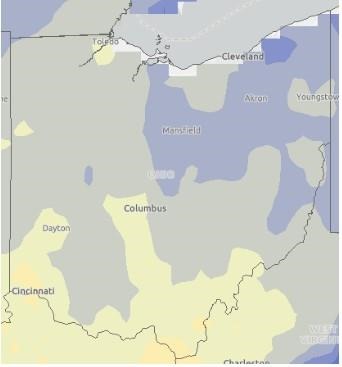
The USDA and U.S. Forest Service manage the large amount of information and number of maps available at https://storymaps.arcgis.com/stories/9ee0cc0a070c409cbde0e3a1d87a487c. Pages and maps include descriptions of current and projected growing degree days, plant hardiness zones, and heat zones. Also, links to other pages with additional information are available. The current (top) and projected (bottom) heat zone maps below are interesting in what they could signal about potential long-term shifts in crop selection and scheduling, farm worker conditions, the use of plastic mulches and low and high tunnels and related technologies, biology (e.g., pests, diseases, weeds, beneficials), soil nutrient cycling, and more. Still, farmers appreciate that even small, more incremental changes in the short-term can be meaningful.
Source : osu.edu