Farms.com Home   Farm Equipment News

New Roller Guides and Short Guards Improve the Easy Cut II Cutterbar System Even More

Despite all technological advances around the combine and platform, the cutting system is still the first part to touch your crop and determines your harvest success. Group Schumacher understands the importance of having a superior cutting system, which is why they announced two new improvements on the Schumacher Easy Cut II Cutterbar System.

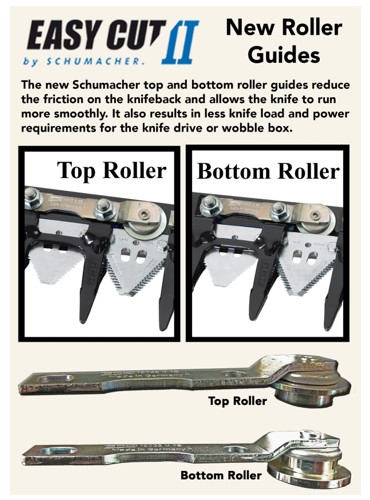
The new Schumacher top and bottom roller guides reduce the friction on the knifeback and allows the knife
to run more smoothly. It also results in less knife load and power requirements for the knife drive or wobble
box.
    
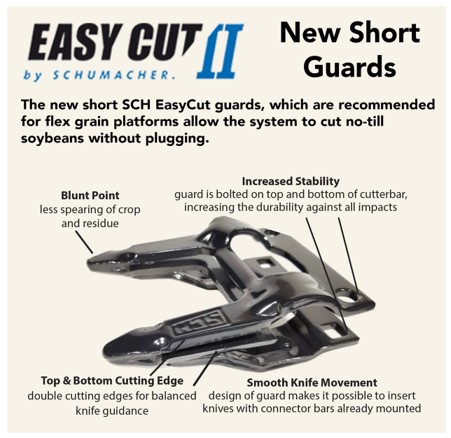
The new short SCH EasyCut guards, which are recommended for flex grain platforms allow the system to cut no-till soybeans without plugging.

Schumacher Easy Cut II Cutterbar Conversion Kit is a universal cutting system that can be used in any type of crop. With the use of spring steel guards, completely hardened sections and roller guides, the Easy Cut II cutting system combines high quality and wear-resistant components to provide the most innovative knife system in the market today. The Easy Cut II system eliminates the need for any adjustments, meaning more uptime and less maintenance.


S.I. Distributing has over 30 years of experience in offering SCH products.

Source: SI Distributing


Trending Video

Seeing the Whole Season: How Continuous Crop Modeling Is Changing Breeding

Video: Seeing the Whole Season: How Continuous Crop Modeling Is Changing Breeding

Plant breeding has long been shaped by snapshots. A walk through a plot. A single set of notes. A yield check at the end of the season. But crops do not grow in moments. They change every day.

In this conversation, Gary Nijak of AerialPLOT explains how continuous crop modeling is changing the way breeders see, measure, and select plants by capturing growth, stress, and recovery across the entire season, not just at isolated points in time.

Nijak breaks down why point-in-time observations can miss critical performance signals, how repeated, season-long data collection removes the human bottleneck in breeding, and what becomes possible when every plot is treated as a living data set. He also explores how continuous modeling allows breeding programs to move beyond vague descriptors and toward measurable, repeatable insights that connect directly to on-farm outcomes.

This conversation explores:

• What continuous crop modeling is and how it works

• Why traditional field observations fall short over a full growing season

• How scale and repeated measurement change breeding decisions

• What “digital twins” of plots mean for selection and performance

• Why data, not hardware, is driving the next shift in breeding innovation As data-driven breeding moves from research into real-world programs, this discussion offers a clear look at how seeing the whole season is reshaping value for breeders, seed companies, and farmers, and why this may be only the beginning.