Farms.com Home   News

NRCS State Conservationist to Speak at Soil and Water Education Conference

Arkansas native and State Conservationist Mike Sullivan of the U.S. Department of Agriculture’s Natural Resources Conservation Service (NRCS) will be the luncheon speaker for Arkansas State University’s 17th annual Soil and Water Education Conference on Friday, Jan. 30, at the A-State Convocation Center, 217 Olympic Drive.
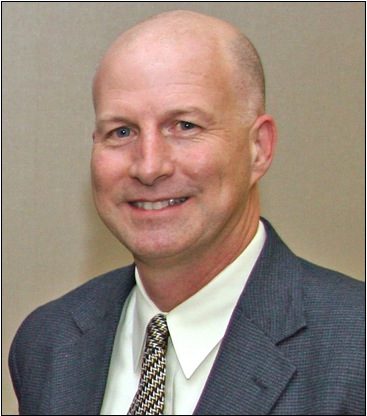
Mike Sullivan

Sullivan is one of a number of speakers slated to discuss topics that include soil health and fertility management, program updates from the U.S. Environmental Protection Agency, a National Weather Service review of 2014’s weather and the forecast for 2015, the state water plan’s implication on area row crops and irrigation water management.

"A-State’s College of Agriculture and Technology is pleased to participate in the Arkansas Soil and Water Education Conference,” said Dr. Tim Burcham, dean of the college. “The conference serves the Mid-South region by providing outreach information/education offerings to the public, farmers, ranchers, educators and agribusiness professionals, and, of course, our students. It features nationally recognized soil and water professionals as well as farmers sharing their real-world experiences in implementing conservation practices. The continued growth of this conference highlights the need for wise use of our natural resources.”

Registration will begin at 8 a.m., followed by two morning sessions, with a mid-morning break included. The luncheon will include Sullivan’s presentation, and will also reveal the recipient of this year’s ‘Outstanding Conservation Award.” A third session will follow the luncheon, and should adjourn at 3 p.m.

During his 33-year career with NRCS, Sullivan has worked in Nebraska, Mississippi, Arizona and Arkansas, where he has served as state conservationist since 2009. He is a registered professional engineer, and earned degrees at the University of Arkansas and Arizona State University.

Registration for the daylong conference, including lunch, is $40. Certified Crop Adviser Soil and Water Continuing Education Units (CEUs) will be awarded to those who attend. To register online, individuals should follow the conference link at AState.edu/SoilAndWater. For questions, contact Chris Jones at 870.972.2043 or by email chrisjones@AState.edu

Source:astate.edu


Trending Video

Spring 2026 weather outlook for Wisconsin; What an early-arriving El Niño could mean

Video: Spring 2026 weather outlook for Wisconsin; What an early-arriving El Niño could mean

Northeast Wisconsin is a small corner of the world, but our weather is still affected by what happens across the globe.

That includes in the equatorial Pacific, where changes between El Niño and La Niña play a role in the weather here -- and boy, have there been some abrupt changes as of late.

El Niño and La Niña are the two phases of what is collectively known as the El Niño Southern Oscillation, or ENSO for short. These are the swings back and forth from unusually warm to unusually cold sea surface temperatures in the Pacific Ocean along the equator.

Since this past September, we have been in a weak La Niña, which means water temperatures near the Eastern Pacific equator have been cooler than usual. That's where we're at right now.

Even last fall, the long-term outlook suggested a return to neutral conditions by spring and potentially El Niño conditions by summer.

But there are some signs this may be happening faster than usual, which could accelerate the onset of El Niño.

Over the last few weeks, unusually strong bursts of westerly winds farther west in the Pacific -- where sea surface temperatures are warmer than average -- have been observed. There is a chance that this could accelerate the warming of those eastern Pacific waters and potentially push us into El Niño sooner than usual.

If we do enter El Nino by spring -- which we'll define as the period of March, April and May -- there are some long-term correlations with our weather here in Northeast Wisconsin.

Looking at a map of anomalously warm weather, most of the upper Great Lakes doesn't show a strong correlation, but in general, the northern tiers of the United States do tend to lean to that direction.

The stronger correlation is with precipitation. El Niño conditions in spring have historically come with a higher risk of very dry weather over that time frame, so this will definitely be a transition we'll have to watch closely as we move out of winter.