Selecting the right winter wheat variety for your operation is an important decision but at times can be overwhelming when considering the classes and varieties available. To help Ontario growers with variety selection decisions, the Ontario Cereal Crop Committee conducts performance trials across the province to evaluate registered varieties and/or varieties supported for registration. These trials provide valuable information on how varieties perform year over year under both a managed (two fungicide applications) and unmanaged regime so that responses to fungicides can also be observed. All past data and the 2018 performance trial data can be found at www.GoCereals.ca.
There are a number of factors to consider when selecting a variety including the location of your farm, winter survival, insect and disease resistance, protein, lodging potential and yield. When looking at the data, it is important to select varieties that perform well in your area across a number of sites and years. Having data from more sites and years will give you a better handle on how that variety will perform. However, if there is a variety with only one year of data, do not turn away from it too quickly. Evaluate the variety’s performance for that year and consider growing it on a smaller number of acres to see how it performs on your farm in particular. It is also helpful to remember that varieties within 3 Yield Index points in the same column are considered to be equal. The Yield Index for all varieties are provided in both managed and unmanaged tables (Table 1 and 2).

Table 1: Ontario Winter Wheat Performance Trial; Cumulative Yield Index Summary for Area I & II Combined, OCCC, August 2018 www.GoCereals.ca.
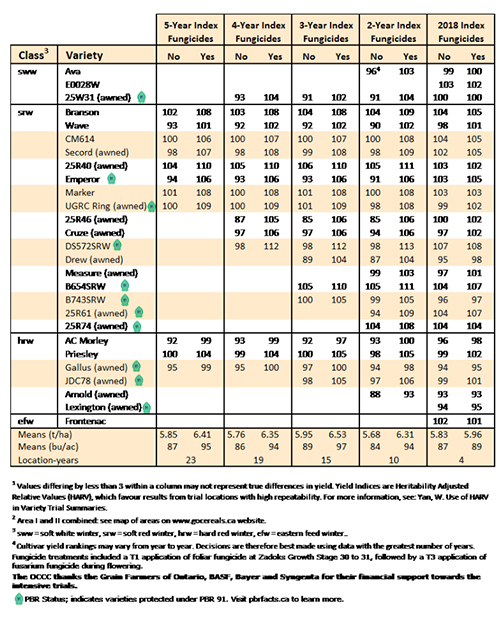
Table 2: Ontario Winter Wheat Performance Trial – Cumulative Yield Indices, Intensive trials Summary for Area I & II Combined, OCCC, August 2018 www.GoCereals.ca.
Winter wheat varietal characteristics are also provided for each variety and include but are not limited to: fusarium and DON, test weight, protein, winter survival, maturity date, etc. (Table 3). This information can be extremely helpful when trying to plan ahead and prepare for the next growing season. For example, if you are in an area where you know you are prone to winter kill you may want to take a closer look at the winter survival data and select a variety that not only yields well but also has a good winter survival rating. Or you may want to know if a variety is susceptible to a disease such as stripe rust so that you can plan ahead and be prepared should the disease show up in your area.
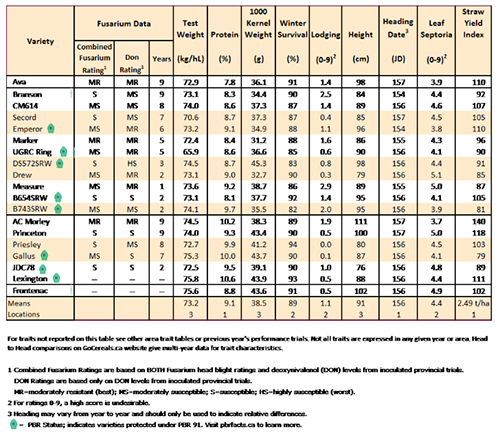
Table 3: Ontario Winter Wheat Performance Trials; Varietal Characteristics Based on Data from Area III OCCC, August 2018 www.GoCereals.ca.
Now, what if you are having a tough time picking between two varieties? The GoCereals.ca website provides a “Head to Head” feature that enables you to dig deeper into the data and compare two to seven varieties against each other based on your growing region and the specific characteristics you are looking for (Figure 1). This tool is a great way to ensure you are picking the right variety suited to your farm and management regime.
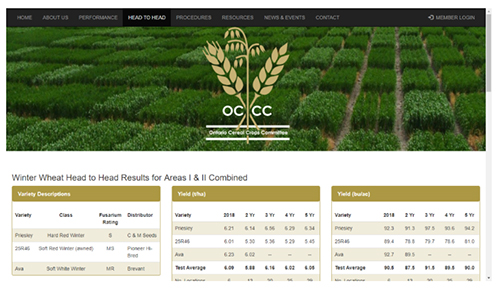
Figure 1: Head to Head feature on www.GoCereals.ca.
Once you have made your winter wheat variety selections and it’s time to plant ensure you are using high quality, certified seed with excellent germination as well as a seed treatment to help protect against seedling diseases.
Source : fieldcropnews