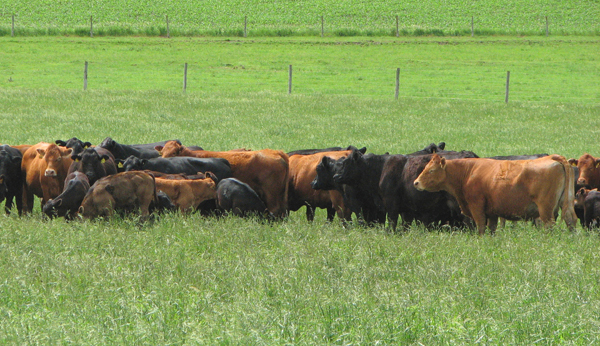
 There is no doubt herd rebuilding is taking place across the United States, but how aggressive the pace is, remains to be determined. Oklahoma State University Extension Livestock Marketing Specialist Derrell Peel predicts the pace is above two and half percent and it could be as much as four percent this year.
“That’s one question, we have to wait and see just how much rebuilding we did this year,” Peel said. “That will set the stage and this continuing events will set the stage then for what happens next year. I think we’ll still be rebuilding next year, but perhaps not as aggressively, as it looked like earlier."
The number of cows in the U.S. continues to grow. Herd expansion started in 2014, continued into 2015 and will continue into 2016, but how many cows will be needed? That’s a question, the industry can’t answer. Peel said consumer demand will ultimately determine the size of the U.S. cattle herd. That will be determined by domestic and international demand in the next two to four years.
Another factor will be U.S. beef production. That comes down to carcass weight. In looking at number of cows and pounds of beef produced, Peel estimates the herd needs to get back to 32 million cows. The last time the U.S. had that many cows was back in 2004. Since then, carcass weights have gotten heavier, so the U.S. producers will grow this herd differently, than in the past. Peel predicts the very earliest that could happen would be 2017.
“There’s lots of reasons why I don’t think we would grow that fast,” Peel said. "That’s pushing the numbers very, very hard, really beyond anything we’ve ever seen in terms of herd expansion. So, I think it’s likely to be into 2018 at the earliest before we get there and there’s still a number of factors that would push it to another year beyond that.”
The U.S. Department of Agriculture’s July cattle inventory report has the nation's cow numbers just below 30 million head. Peel said U.S. producers added 700 thousand cows last year and another 750 thousand head could be added this year. He think the U.S. cattle industry will still need another million head, before the industry will slow herd expansion.
Click here to see more...